
Sponsored

Stop Worrying about OIL BRAND... This Matters MORE -The Motor Oil Geek

zumbooruk

Senior Member
Joined
Oct 19, 2024
Threads
12
Messages
699
Reaction score
662
Location
Ventura CA
Vehicle(s)
2025 FL5, 2014 Chevy Suburban (wife), previous 2007 FA5
Dirty oil is bad oil. It doesn’t matter if the oil is synthetic or conventional, when your oil is dirty, wear is higher. As an oil analyst, I can tell you that we often see high cylinder wear (Iron, Chromium and Aluminum) when there is a high level of dirt (Silicon) in the oil. Because cleanliness is critical to engine health, let’s dig into the SCIENCE of filtration.

Sponsored

 
OP
OP
zumbooruk

zumbooruk

Senior Member
Joined
Oct 19, 2024
Threads
12
Messages
699
Reaction score
662
Location
Ventura CA
Vehicle(s)
2025 FL5, 2014 Chevy Suburban (wife), previous 2007 FA5
I've reached the same conclusion years ago, and have been using Fram Ultra Synthetic, which used to be the best most efficient at filtering sub 20 micron particles, 99.8 percent at 15 microns. (as were Amsoil, Royal Purple, Mobil 1, all of which, and many more labels, were manufactured by First Brands)

Yet I have hard time figuring out which might be the current "best" filter

By "best" I mean high filtration efficiency at less than 20 micron, high flow rate, low pressure drop, correct bypass valve pressure, bypass valve does not leak and lets unfiltered oil through, and good anti-drainback valve.

And, no, I do not believe that the Honda OEM filter is the best

The Honda A02 filter used to be made by First Brands and was the same as the cheapest lowest grade Fram, not the best Fram Ultra Synthetic.

Obviously Honda does not make their own filter, they just contract with a filter manufacturer (First Brands and now Mahle), so if I have to guess, probably the same (i.e. not the top of the line) applies to the current Japan made, or any variations such as the "Made in China" H01, Honda oil filters...

Just because it says Honda on the label, does not mean it is the best, most efficient filter to protect our engines and the turbocharger.

Honda has no interest in keeping our K20C1 engines and turbochargers lasting more than 120,000 miles. they would much rather sell us new Hondas, or pay them to replace/fix the engines.

Premium Guard, the new owner of the Fram brand might or might not use the original Fram manufacturing plant (I recall reading that the plant was dismantled?) so the new "Fram" filters showing up on shelves now might or might not be the same as the originals. and might be just relabeled Premium Guard filters, even though they kept the exact same part numbers...

It does matter!!!

Unlike oil which starts degrading at about 1,500-2,000 and should be replaced at 4,000-5,000 miles, high filtration efficiency at under 20 microns matters from the first mile.

Particles in the 5–20 micron range do the most damage inside the turbocharger because they match the oil film thickness and journal clearances.

A turbo shaft spins at hundreds of thousands RPM on a hydrodynamic oil film only a few microns thick. The inner radial clearance of a typical small automotive floating-ring or journal bearing is commonly 7.5–15 microns at room temperature, and the minimum film thickness under load is often 1–20 microns and can be near 7 microns at full load.

A hard particle whose diameter is close to that film thickness can bridge the gap, cut the shaft or bearing, and act as a lapping compound.

Particles much larger than the clearance tend to be swept aside, and particles much smaller than the film usually pass through with less immediate damage.

Filtration that is efficient below 20 microns therefore removes the particles that actually score bearings rather than the ones that are already too large to enter the gap.

Independent engine tests found 70 percent less abrasive wear when filtration improved from 40 microns to 15 microns.

Note that a nominal “20 micron” rating is almost meaningless without efficiency data. A filter that is 50 percent efficient at 20 microns still lets half of those particles through on each pass. A filter that is 99 percent efficient at 20 microns keeps the circulating particles much lower.

Also the more expensive "better" 20K mile filters usually have less filtration efficiency, otherwise they will clog much sooner, and the bypass valve will open.

A good filter also needs low pressure drop and high enough flow, a bypass valve that stays closed in normal use and opens only as a last resort, yet no to low leakage before.

Also need to have a good anti-drainback valve, good gasket to prevent leaks, strong can that will not burst, and enough dirt-holding capacity to last the oil-change interval (the only thing that does not matter with short OCI),

High efficiency at 15–20 microns is useless if the filter is in bypass, empty at start, or starving the turbo of oil...
AI summary of the current best oil filters. excluding the original Fram/Amsoil/Royal Purple.

note that the top three are current PGI made filters. which is encouraging if Fram/Amsoil/Royal Purple will be relabeled PGI. though best would be if they would make them identical to the First Brands Champion Lab construction.

Disclaimer, below was generated by AI. "Don't Trust, AND Verify"

For the common Honda M20 × 1.5 spin-on used on the K20C1 (15400-PLM-A02 size), the filters that currently best match high 15–20 µm efficiency, high flow, a tight bypass that cracks toward the upper end of the usual 8–17 psi band, a working anti-drainback valve, and a reliable gasket are PGI’s extended-life group first, then MANN+HUMMEL’s PurolatorONE and Wix lines, then the Japan Mahle Honda can. Independent ISO 4548-12 data at 15–20 µm is sparse and often contradicts box claims. Rankings below use published ISO figures when they exist and conservative estimates when they do not. Fram Ultra Synthetic, Amsoil, and Champion Labs Royal Purple are omitted as requested.

How the ranking was applied

Efficiency at 15–20 µm is first. Clean flow and pressure drop are second. Bypass leakage and a higher crack pressure are third. Dirt capacity and burst strength are ignored. Construction of the anti-drainback valve and gasket is noted when it is a known strength or weakness.

Ranked filters

Carquest Premium (PGI / VAFI, Honda-size 84356 or current 57356-class Premium SKU).
This is the strongest current match to the stated criteria among filters that still have a published ISO 4548-12 number near 20 µm. Advance Auto and Carquest list 99.5 percent efficiency at 20 µm on synthetic-blend media. Cut-opens and owner reports consistently show a silicone anti-drainback valve and a silicone or high-grade gasket that stays soft. Flow is in the normal PGI range, not the lowest restriction in the class, but it is adequate on a short 5,000 mile interval. Bypass is a conventional spring design in the common 8–11 psi band, which is the main con. That set point is lower than ideal if the goal is to stay on the filtered path during cold, thick oil. QC from PGI’s Vietnam lines has been more consistent than the disrupted First Brands plants. https://bobistheoilguy.com/forums/threads/all-about-carquest-oil-filters.390750/

Premium Guard Extended Life / Ultimate (PGI house brand, Honda-size PG equivalent of 57356). Same factory family as Carquest Premium. Published figures are 99 percent multi-pass at 20–25 µm depending on the exact SKU sheet. Silicone anti-drainback and a heat-stable gasket are standard on the extended-life cans. Pros are the same media and valve package as Carquest Premium, often at a lower street price, plus PGI’s own QC rather than a newly acquired Fram line. Cons are inconsistent micron wording across PGI brand sheets (20 µm on one page, 25 µm on another) and a bypass that is not documented as a high-crack, low-leak design. Treat it as equal to Carquest Premium when the can is the extended-life version with pink or red silicone rubber. https://bobistheoilguy.com/forums/t...rquest-premium-microgard-select-specs.391952/

Microgard Select (O’Reilly, PGI). Same PGI extended-life construction as Carquest Premium. O’Reilly publishes 99 percent at 25 µm. That is a slightly coarser advertised point, so estimated 15–20 µm efficiency is a little below Carquest Premium even if the media looks identical in cut-opens. Silicone anti-drainback and gasket are the usual PGI parts. Flow is comparable. Bypass is again the ordinary 8–11 psi class. The con is the more conservative published micron number and the fact that O’Reilly also sells a cheaper Microgard that is not the Select. Buy only the Select can. https://www.oreillyauto.com/detail/c/select/microgard-select-oil-filter/

PurolatorONE PL14610 (MANN+HUMMEL). Historically this was one of the few filters marketed at 99.9 percent at 20 µm with a silicone anti-drainback valve and a PTFE-treated gasket that resists leaks and eases removal. Flow is generally good and restriction is moderate. Pros are the parent company’s real filtration engineering, a gasket design that has a long clean record, and wide availability. Cons are that current packaging often says only “over 99 percent dirt removal” without a 15–20 µm ISO figure, and independent multi-pass results on related Purolator SKUs have not always matched the old PureONE claim. Bypass is typically mid-band, not the high end. Still a first-line choice if PGI stock is unavailable. https://www.amazon.com/Purolator-PL14610-PurolatorONE-Oil-Filter/dp/B000E8V9RG

Wix 57356 (MANN+HUMMEL). Wix currently lists about 99 percent at 23 µm, 9–11 gpm flow, and an 8–11 psi bypass on this Honda-size can. Independent flow benches usually put standard Wix among the lowest-restriction filters in the group, which is a real plus for turbo oil pressure after a cold start. Silicone anti-drainback and a quality gasket are standard. Cons are the 8–11 psi bypass (opens earlier than you asked for) and the fact that Wix’s 23 µm claim is not a 15–20 µm ISO result. Older Wix data sat near 50 percent at about 20 µm. Use it when flow matters more than the last few points of 20 µm capture. https://www.go-parts.com/ps-product-new.php?sku=4DAFDE9

Wix XP 57356XP (MANN+HUMMEL). Same can family with synthetic-blend media aimed at longer intervals. Flow is the best measured result in the Ascent 30 L/min bench among the filters still in this list (about 5 psi differential on that rig). Construction, anti-drainback, and gasket follow the regular Wix pattern. Cons are more serious on your first criterion. An independent ISO 4548-12 run on the XP line returned only about 62 percent at 20 µm against a 95 percent at 35 µm advertisement. Bypass remains 8–11 psi. XP is the flow leader, not the 15–20 µm leader. https://www.speed-talk.com/forum/viewtopic.php?t=63818

Honda 15400-RTA-003 (Mahle Tennex, Japan). This is the better genuine Honda can. Cut-opens show metal structure, a silicone anti-drainback valve that stays pliable, a Honda-profile gasket that seals on the factory base, and a bypass Honda calibrated for this engine family. Flow is OEM-matched to the K20C1 pump curve. Efficiency at 15–20 µm is not published as a high Beta figure. Estimate is typical OEM, roughly 50–80 percent at 20 µm, well below PGI’s 99.5 percent claim. Pros are fit, gasket, anti-drainback, and a bypass that is meant for Honda oil pressure (idle minimum about 13 psi hot). Cons are ordinary, not class-leading, fine-particle capture. Prefer this over the US 15400-PLM-A02 if you want OEM. https://www.hybrid-racing.com/products/oem-k-series-oilfilter

Mobil 1 Extended Performance M1-110 / M1-110A (Highline Warren since February 2025). Older Mann-built Mobil 1 filters were among the lowest-restriction cans and used a 12–16 psi bypass, which is closer to the high end you want. Current boxes still advertise about 99 percent at 30 µm, not 15–20 µm, so estimated 20 µm efficiency is mid-pack. Highline Warren is now the exclusive supplier. Recent cans are reported from Korea or Vietnam, sometimes with plastic end caps. Anti-drainback and gasket quality on the new production is not independently mapped the way the old Mann cans were. Pros are historically excellent flow and a higher bypass band. Cons are the coarser published micron rating and an unproven maker change. Do not treat today’s M1-110A as the same filter that was tested five years ago. https://www.prnewswire.com/news-rel...c-relationship-with-exxonmobil-302443331.html

Purolator BOSS PBL14610 (MANN+HUMMEL). This filter scores well on your second and third criteria and poorly on the first. Bypass is listed around 14–18 psi, the highest common figure in this size. Flow is good (about 6.8 psi drop at 30 L/min in the Ascent bench). Silicone anti-drainback and a PTFE gasket are in the Purolator premium kit. The problem is efficiency. The same independent ISO 4548-12 test that confirmed Fram Ultra at 99.96 percent at 20 µm measured BOSS at 61.8 percent at 20 µm. It is a high-flow, high-bypass filter that lets through too many 15–20 µm particles for a tight turbo journal. https://www.speed-talk.com/forum/viewtopic.php?t=63818

Honda 15400-PLM-A02 (current US dealer can, Honeywell / Fram-type construction). Fit and gasket profile are correct. Bypass is often quoted in the 11–17 psi window. Anti-drainback is present. Efficiency is the weak point. This can has long been treated as a basic cellulose or light-blend filter, with forum estimates near 50–70 percent at 20 µm and fiber end caps on many lots. It meets Honda’s minimum, not the 15–20 µm target. Use it only when a better can is not on the shelf. https://bobistheoilguy.com/forums/threads/the-honda-oil-filter-thread.394222/

NAPA Gold in the current PGI era (Honda-size 1356 / 57356 equivalent). When the can is PGI-built rather than old Wix-built, it belongs with Microgard Select. Some sheets say 99 percent at 23 µm. Silicone anti-drainback is common on recent pink-gasket lots. Confirm the can is the current PGI construction, not leftover Wix Gold, because the two are not the same product anymore. Bypass remains the 8–11 psi class. https://bobistheoilguy.com/forums/threads/here-are-premium-guards-main-oil-filter-suppliers.387629/
 
Last edited:

Cueyo

Senior Member
Joined
Nov 3, 2023
Threads
22
Messages
1,072
Reaction score
854
Location
USA
Vehicle(s)
2025 Civic Type R
Lol, watching this video gave me fuel filter anxiety 😅

That said, from this video alone I have a few thoughts:

1. I didn't see much information regarding the differential pressure or flow across the tested filter mediums. I saw the efficiency was mentioned about particles, but nothing of flow.

In an ideal world, a purpose made filter for engine oil would change based on the weight of the oil (mentioned fluids like oil have a "harder time" letting go of particulate than air), the ideal flow rate (in the video they said ~8gpm is normal in engines), and how much filtering you require. If I were to have a perfect oil filter, it would filter without ever changing the flow, like you mentioned.

2. From the testing, the cellulose filter seems to "filter better" than the other two kinds, but quickly falls off after a certain amount of time. The same can be said about the synthetic, but it just takes longer. On one of the graphs I saw 36 minutes as the max on the x axis of the graph, which seems like an incredibly short time considering the application. It makes me think back to the idea that a clogged filter filters better than any other filter.

Which leads me to the question, since there are tradeoffs to filtration/flow, would the idea filter be the best at filtering?

3. We've talked about the filtration efficiency, but also noted that it changes based on the size of the particle and needs of the engine. Do we know why Honda has not tried to make more efficient filters - or rather, has the filter spec changed over the years in terms of flow and efficiency?

If we knew the flow rate that was ideal for the k20c1, the rest of the process in finding the ideal filter would be easy. Just choose for the best filtering filter that meets the flow requirement.

4. The video mentioned that there is no regulation for filter efficiency advertisement, just thought this was interesting since it would make it harder to find a good filter if you knew the other requirements.
 

I♥️LCY

Senior Member
Joined
Sep 18, 2026
Threads
6
Messages
116
Reaction score
101
Location
Inland Empire
Vehicle(s)
2026 Honda Civic Type R
Zum, oil filter choice is a struggle of mine too. Was a big fan of the sparkly purolator. RN, tired of researching everything. I quantify everything—I'm trying to break that habit and just chill. Be ok w/ mid-field, resist deep-dives, LOL.

Post break in commitment
OTS filter + OTS oil that fits the bill w/ 3K OCI = my solution.
 
OP
OP
zumbooruk

zumbooruk

Senior Member
Joined
Oct 19, 2024
Threads
12
Messages
699
Reaction score
662
Location
Ventura CA
Vehicle(s)
2025 FL5, 2014 Chevy Suburban (wife), previous 2007 FA5
Zum, oil filter choice is a struggle of mine too. Was a big fan of the sparkly purolator. RN, tired of researching everything. I quantify everything—I'm trying to break that habit and just chill. Be ok w/ mid-field, resist deep-dives, LOL.

Post break in commitment
OTS filter + OTS oil that fits the bill w/ 3K OCI = my solution.
I am a recovering perfectionist, with a touch of OCD, but I keep falling off the wagon...


OP
OP
zumbooruk

zumbooruk

Senior Member
Joined
Oct 19, 2024
Threads
12
Messages
699
Reaction score
662
Location
Ventura CA
Vehicle(s)
2025 FL5, 2014 Chevy Suburban (wife), previous 2007 FA5
Lol, watching this video gave me fuel filter anxiety 😅

That said, from this video alone I have a few thoughts:

1. I didn't see much information regarding the differential pressure or flow across the tested filter mediums. I saw the efficiency was mentioned about particles, but nothing of flow.

In an ideal world, a purpose made filter for engine oil would change based on the weight of the oil (mentioned fluids like oil have a "harder time" letting go of particulate than air), the ideal flow rate (in the video they said ~8gpm is normal in engines), and how much filtering you require. If I were to have a perfect oil filter, it would filter without ever changing the flow, like you mentioned.

2. From the testing, the cellulose filter seems to "filter better" than the other two kinds, but quickly falls off after a certain amount of time. The same can be said about the synthetic, but it just takes longer. On one of the graphs I saw 36 minutes as the max on the x axis of the graph, which seems like an incredibly short time considering the application. It makes me think back to the idea that a clogged filter filters better than any other filter.

Which leads me to the question, since there are tradeoffs to filtration/flow, would the idea filter be the best at filtering?

3. We've talked about the filtration efficiency, but also noted that it changes based on the size of the particle and needs of the engine. Do we know why Honda has not tried to make more efficient filters - or rather, has the filter spec changed over the years in terms of flow and efficiency?

If we knew the flow rate that was ideal for the k20c1, the rest of the process in finding the ideal filter would be easy. Just choose for the best filtering filter that meets the flow requirement.

4. The video mentioned that there is no regulation for filter efficiency advertisement, just thought this was interesting since it would make it harder to find a good filter if you knew the other requirements.
Donaldson filter seem to be for commercial/diesel applications, but I believe that the conclusion also applies to our cars, esp with the tight Honda tolerances.

as far as Honda not making more efficient filters, see above for my opinion
Honda has no interest in keeping our K20C1 engines and turbochargers lasting more than 120,000 miles. they would much rather sell us new Hondas, or pay them to replace/fix the engines.
I could not find any recent third party tests for filtering efficiency, which is why I could not figure out the current "best" filter.
 

Cueyo

Senior Member
Joined
Nov 3, 2023
Threads
22
Messages
1,072
Reaction score
854
Location
USA
Vehicle(s)
2025 Civic Type R
I am a recovering perfectionist, with a touch of OCD, but I keep falling off the wagon...
I find myself falling into severe analysis paralysis. Still very much in that paralysis part of my life 🤣

I could not find any recent third party tests for filtering efficiency, which is why I could not figure out the current "best" filter.
Might just be an insurmountable task if the filter specs have changed at all. Worse, I fear Honda has a similar spec for all their engines and no one cared to publish any info regarding the k20c1 that wasn't internal.

Would be nice to just be able to have a fancy multi million dollar oil filter testing machine.
 
OP
OP
zumbooruk

zumbooruk

Senior Member
Joined
Oct 19, 2024
Threads
12
Messages
699
Reaction score
662
Location
Ventura CA
Vehicle(s)
2025 FL5, 2014 Chevy Suburban (wife), previous 2007 FA5
I asked AI [don't trust and verify] about flow rates and filtration efficiency

The K20C1 oil pump has no widely published exact volumetric flow rate for the production Type R engine. Closely related K20A2 pump displacement is about 54 L/min (≈14 GPM) at 6000 rpm, but the pressure relief valve opens early and regulated flow through the engine is substantially lower (typically estimated in the 5–8 GPM / 18–30 L/min range once pressure stabilizes).⁠K20a

Common M20×1.5 filters that fit the K20C1 (OEM 15400-PLM-A02 family) are rated in the 9–11 GPM range by manufacturers such as WIX. This exceeds typical regulated engine demand. Differential pressure (restriction) varies more than raw flow capacity and is the practical tradeoff with efficiency.⁠Niparts

Highest practical filtration efficiency below 20 microns, with acceptable flow for the K20C1, comes from synthetic-media filters with strong independent ISO 4548-12 data (e.g., FRAM Ultra XG7317 class). These capture the particle sizes most damaging to turbo journal bearings while keeping pressure drop low enough that the bypass stays closed under normal hot operation.

Filtration Efficiency vs. Flow Tradeoff and Ideal Choice

Particles in the 5–20 µm range can bridge the thin hydrodynamic film and tight clearances in turbo floating-ring or journal bearings (film thickness often 1–20 µm under load). Filters that are highly efficient below 20 µm remove the most damaging particles. Particles much larger tend to be excluded by clearances or the bypass path; particles much smaller cause less immediate abrasive damage.

Higher efficiency usually increases media restriction. If the pressure drop across the filter becomes large (cold thick oil, loaded media, or high flow), the bypass valve opens and unfiltered oil reaches the engine and turbo. The goal is therefore high efficiency at 15–20 µm combined with low clean ΔP and adequate dirt-holding capacity so the bypass remains closed under normal hot operation.

Independent ISO 4548-12 testing has repeatedly shown FRAM Ultra-class synthetic media (XG7317 size) achieving ~99.9 % efficiency at 20 µm with competitive pressure drop (among the better-flowing high-efficiency filters tested). Purolator PureONE media is also strong in this size range. Premium PGI-made filters (certain Carquest Premium / MicroGard Select SKUs) list high efficiency claims near 99 % at 20 µm on synthetic-blend media. Standard cellulose OEM-style filters are typically less efficient at the critical small sizes.
 
OP
OP
zumbooruk

zumbooruk

Senior Member
Joined
Oct 19, 2024
Threads
12
Messages
699
Reaction score
662
Location
Ventura CA
Vehicle(s)
2025 FL5, 2014 Chevy Suburban (wife), previous 2007 FA5
also asked AI about current Fram made by PGI and the new H01 made in China filter:

The current FRAM Ultra Synthetic XG7317 under Premium Guard Inc. (PGI) ownership is not the same design, build, or performance specification as the earlier Honeywell/early First Brands “OG” version that performed best in independent ISO 4548-12 tests.

Design changes already occurred under First Brands (loss of wire backing on media, shift toward Champion Labs-style construction on some units). PGI’s 2026 acquisition of the brand, IP, and production assets does not restore the prior media or construction. Marketing claims remain similar, but independent verification of the post-PGI filter is lacking.

The Honda 15400-R5G-H01 (H01) is a genuine current OEM filter manufactured by Mahle in China. It is a functional OEM-spec part that supersedes the older low-grade 15400-PLM-A02, but it is not a high-efficiency synthetic-media filter comparable to the old FRAM Ultra class. It is adequate for normal OEM intervals yet inferior to proven high-efficiency aftermarket options for sub-20 µm particle control relevant to turbo bearings.


CG13

Senior Member
Joined
Feb 7, 2024
Threads
6
Messages
153
Reaction score
178
Location
Houston
Vehicle(s)
2024 FL5 Civic Type R
With all these oil conversations over the years, I am always left wondering if there is some issue that people are trying to solve for.

Is anyone seeing K20C1 engines failing?

The conversations seem to take place across all brands and are always full of anecdotes about what works and what doesn’t, what’s best, etc. I never really see anything about the actual problem being addressed.
 

J_D

Senior Member
First Name
J
Joined
May 9, 2024
Threads
20
Messages
498
Reaction score
522
Location
Montreal
Vehicle(s)
2024 Civic Type R
You are worrying too much. I ran regular old M1 EP 0W20 oil with a Honda oil filter for ~ 10 hours of track time plus daily driving and the oil analysis came out fine
 

Cueyo

Senior Member
Joined
Nov 3, 2023
Threads
22
Messages
1,072
Reaction score
854
Location
USA
Vehicle(s)
2025 Civic Type R
You are worrying too much. I ran regular old M1 EP 0W20 oil with a Honda oil filter for ~ 10 hours of track time plus daily driving and the oil analysis came out fine
I think it's the equivalent of when you go to the store to buy a A/C filter and they have a bunch of different options. Do you choose what filters best or flows best? We know what size of particle we want to filter, but not the flow we want (at least officially), but there's also no regulation on what filter manufacturers can advertise. The Honda filter is a one-size it's all, I doubt it'll ever damage anything, but look at where we all are. A group of car enthusiasts that buy a platform known for optimizing the crap out of things, I think it's expected that we'd wanna know what the best oil filter is lol.

I asked AI [don't trust and verify] about flow rates and filtration efficiency

The K20C1 oil pump has no widely published exact volumetric flow rate for the production Type R engine. Closely related K20A2 pump displacement is about 54 L/min (≈14 GPM) at 6000 rpm, but the pressure relief valve opens early and regulated flow through the engine is substantially lower (typically estimated in the 5–8 GPM / 18–30 L/min range once pressure stabilizes).⁠K20a

Common M20×1.5 filters that fit the K20C1 (OEM 15400-PLM-A02 family) are rated in the 9–11 GPM range by manufacturers such as WIX. This exceeds typical regulated engine demand. Differential pressure (restriction) varies more than raw flow capacity and is the practical tradeoff with efficiency.⁠Niparts

Highest practical filtration efficiency below 20 microns, with acceptable flow for the K20C1, comes from synthetic-media filters with strong independent ISO 4548-12 data (e.g., FRAM Ultra XG7317 class). These capture the particle sizes most damaging to turbo journal bearings while keeping pressure drop low enough that the bypass stays closed under normal hot operation.

Filtration Efficiency vs. Flow Tradeoff and Ideal Choice

Particles in the 5–20 µm range can bridge the thin hydrodynamic film and tight clearances in turbo floating-ring or journal bearings (film thickness often 1–20 µm under load). Filters that are highly efficient below 20 µm remove the most damaging particles. Particles much larger tend to be excluded by clearances or the bypass path; particles much smaller cause less immediate abrasive damage.

Higher efficiency usually increases media restriction. If the pressure drop across the filter becomes large (cold thick oil, loaded media, or high flow), the bypass valve opens and unfiltered oil reaches the engine and turbo. The goal is therefore high efficiency at 15–20 µm combined with low clean ΔP and adequate dirt-holding capacity so the bypass remains closed under normal hot operation.

Independent ISO 4548-12 testing has repeatedly shown FRAM Ultra-class synthetic media (XG7317 size) achieving ~99.9 % efficiency at 20 µm with competitive pressure drop (among the better-flowing high-efficiency filters tested). Purolator PureONE media is also strong in this size range. Premium PGI-made filters (certain Carquest Premium / MicroGard Select SKUs) list high efficiency claims near 99 % at 20 µm on synthetic-blend media. Standard cellulose OEM-style filters are typically less efficient at the critical small sizes.
I'm a little skeptical about the k20a2 comparison, but it makes a good point on the latter half of the response. If all these oil filters exceed standard minimum flow for the engine, then like you've mentioned, we should be looking for the best filtering filter.

Not to dive deeper into the rabbit hole, but it also makes me think about whether there is an ideal flow rate to maintain oil pressure in the system. Do we interfere with the naturally occuring pressure changes by introducing a better flowing filter?
 
OP
OP
zumbooruk

zumbooruk

Senior Member
Joined
Oct 19, 2024
Threads
12
Messages
699
Reaction score
662
Location
Ventura CA
Vehicle(s)
2025 FL5, 2014 Chevy Suburban (wife), previous 2007 FA5
Is anyone seeing K20C1 engines failing?
No, but I like to be proactive and prevent any possible issues


You are worrying too much. I ran regular old M1 EP 0W20 oil with a Honda oil filter for ~ 10 hours of track time plus daily driving and the oil analysis came out fine
Agree, I do worry too much.

But I want to keep my FL5 for a long time. in over 45 years I only bought three cars. My previous 07 FA5 had over 180k miles in over 18 years. Wife's previous Sienna had 260k miles in over 19 years. Her current Suburban has 150k miles in over 12 years.

Keeping the oil clean by changing every 3-4k miles and using sub-twenty micron high efficiency oil filter, can extend engine life into the hundreds of thousands of miles.
 
  • Like
Reactions: jcb

qingcong

Senior Member
Joined
Nov 29, 2023
Threads
9
Messages
78
Reaction score
138
Location
North Carolina
Vehicle(s)
2024 FL5, 2013 Si, 1991 NSX
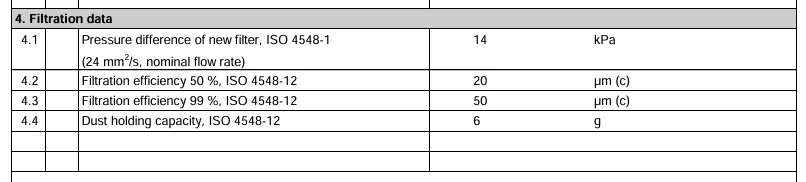
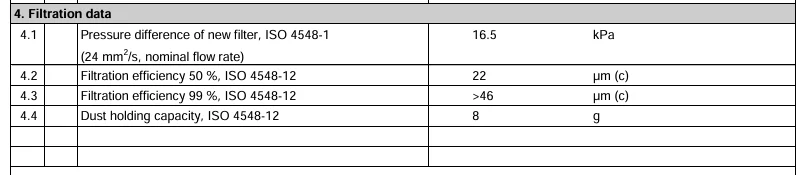
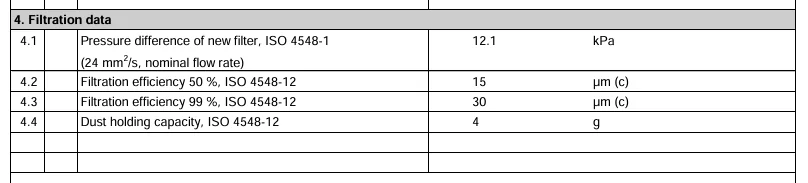
Sometime ago I reached out to Purolator and Mobil 1 to get the spec sheets on their efficiency data. To my surprise they sent them right over.


Mobil 1 M1-110A
11th Gen Honda Civic Stop Worrying about OIL BRAND... This Matters MORE -The Motor Oil Geek 1791805899688-xo


Purolator Boss PBL14610
11th Gen Honda Civic Stop Worrying about OIL BRAND... This Matters MORE -The Motor Oil Geek 1791805946176-h1


Purolator One PL14610
11th Gen Honda Civic Stop Worrying about OIL BRAND... This Matters MORE -The Motor Oil Geek 1791805974390-


Top