
Vito.FL5
Senior Member
- Thread starter
- #1
About my build — a few days ago I saw a post from a famous "pro tuner" saying that the ECU was designed to operate with a MAF and that only hackjobs delete it.
Well... he has no clue.
The MAF sensor is not used directly to calculate load. On Bosch ECUs, the MAF is used to calculate manifold pressure, and then the ECU does some math based on things like camshaft timing and exhaust pressure to determine how much air is actually trapped inside the cylinder.
So, if the MAF is being used to calculate intake manifold pressure, why don't we just use the actual MAP sensor reading instead?
Well, if you disconnect the MAF sensor and drive the car, you'll notice that it actually drives pretty well. That's because once a MAF fault is detected, the ECU switches over to the MAP sensor in the intake manifold to determine load instead of using FUPSRL, which is calculated.
But I obviously don't want to drive around with a CEL on. So what do we do?
Fortunately, Bosch basically paved the road for us.
All you have to do is disable the MAF sensor via codeword, and all the MAF-related diagnostics go away.
Actually disconnecting the sensor is another story, though.
One of the four wires going to the MAF is connected to the intake air temperature sensor. When you disconnect the MAF assembly, you also lose that temperature reading, and the ECU replaces it with a calculated value.
I couldn't find a codeword to make that transition cleanly, so a little bit of patching was necessary. I replaced the sensor value with the ECU's calculated value and that was it.
MAF gone, no CEL, and the ECU operates using the MAP-based strategy that Bosch already implemented.
PWG conversion
The PWG part was a little more fun.
I've used the canister valve output to control other stuff for a long time, so that was my first logical choice for controlling the wastegate solenoid.

It worked like a charm on the first try.
I tested the output between 10 and 100 Hz and the signal was clean, so I decided to go ahead with the project.
This was about 10 days before the Time Attack, by the way.
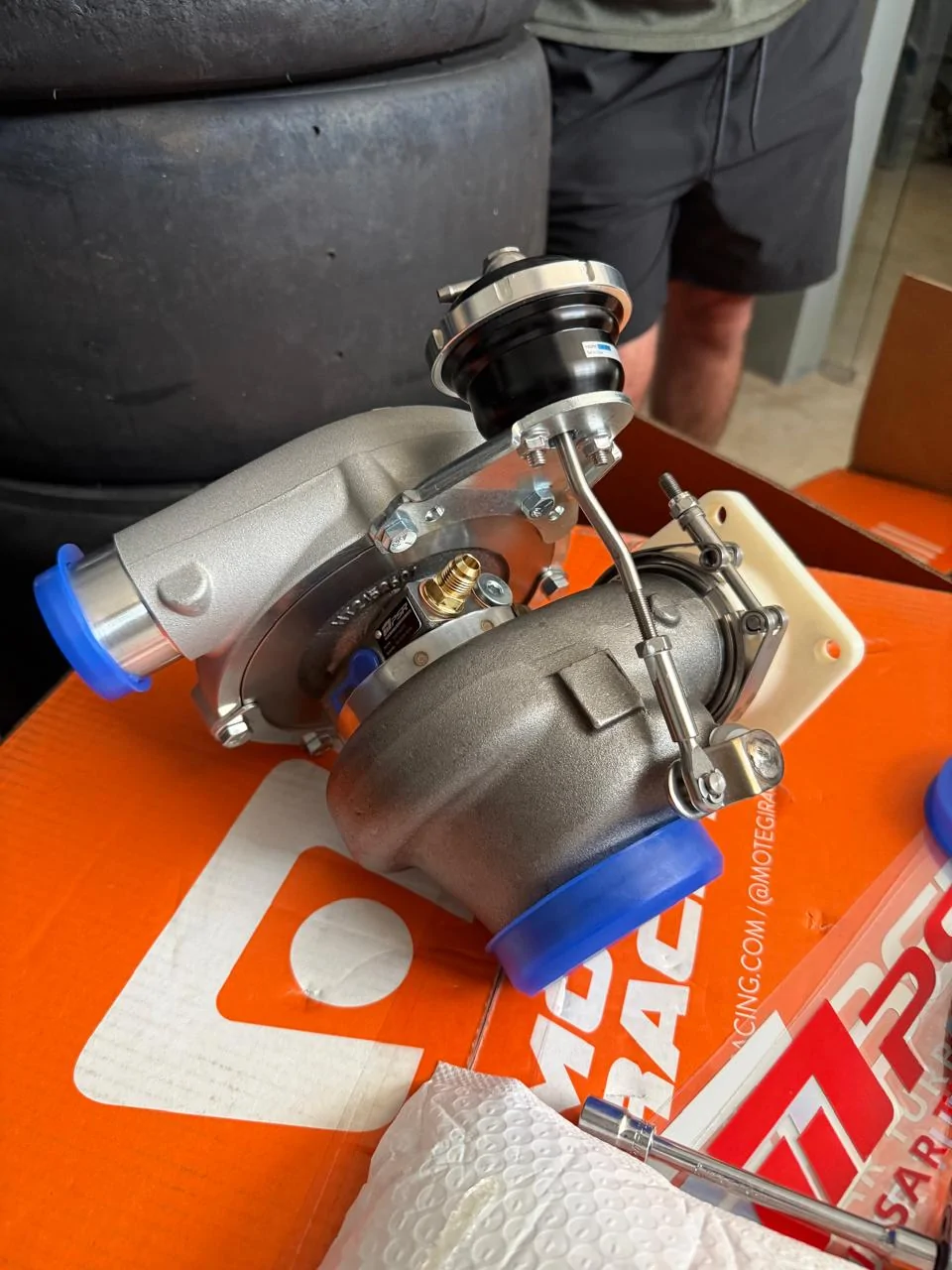
I 3D printed some parts for test fitting and installed the Chinese turbo.
I hate counterfeit stuff, and honestly I assumed the turbo would be garbage. The idea was just to use it to prove that the whole system worked. If it didn't, I could shelve the project, put the stock turbo back on, and move on.
I was wrong, BTW. The turbo actually works pretty well.

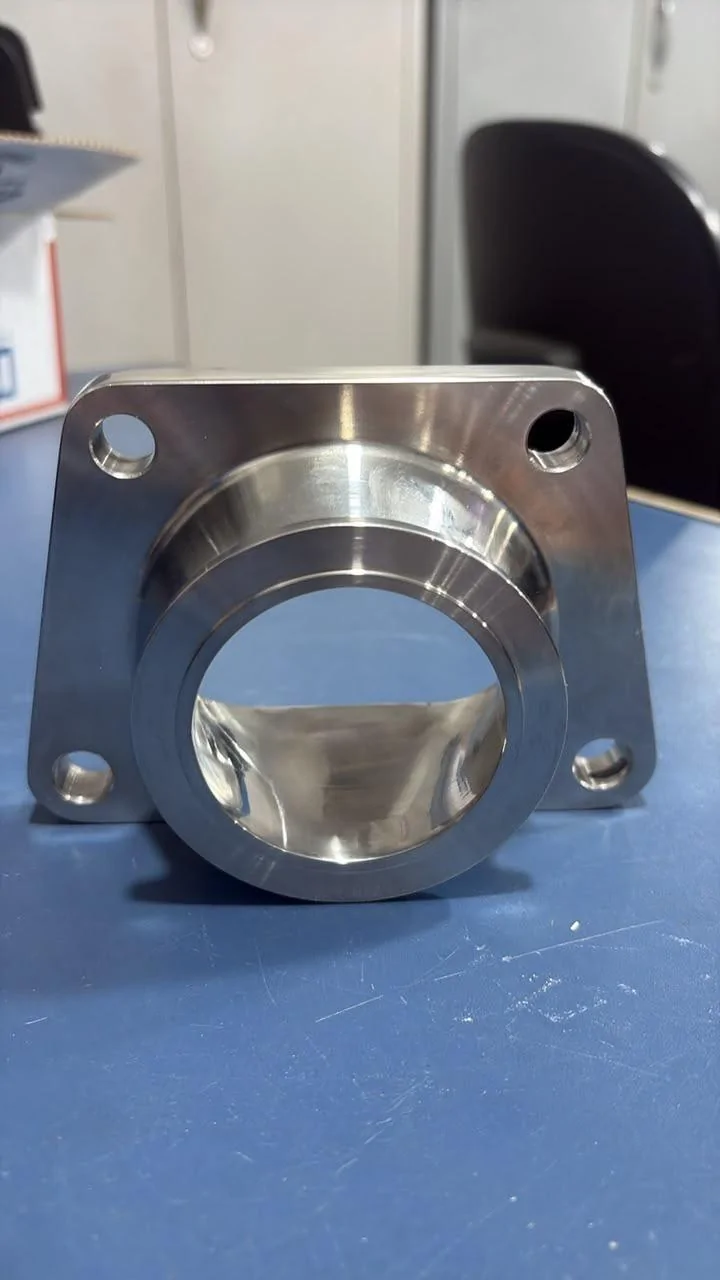
Once I knew everything fit, I moved on to machining the final part out of 304 stainless:
Then I "hackjobbed" a downpipe:
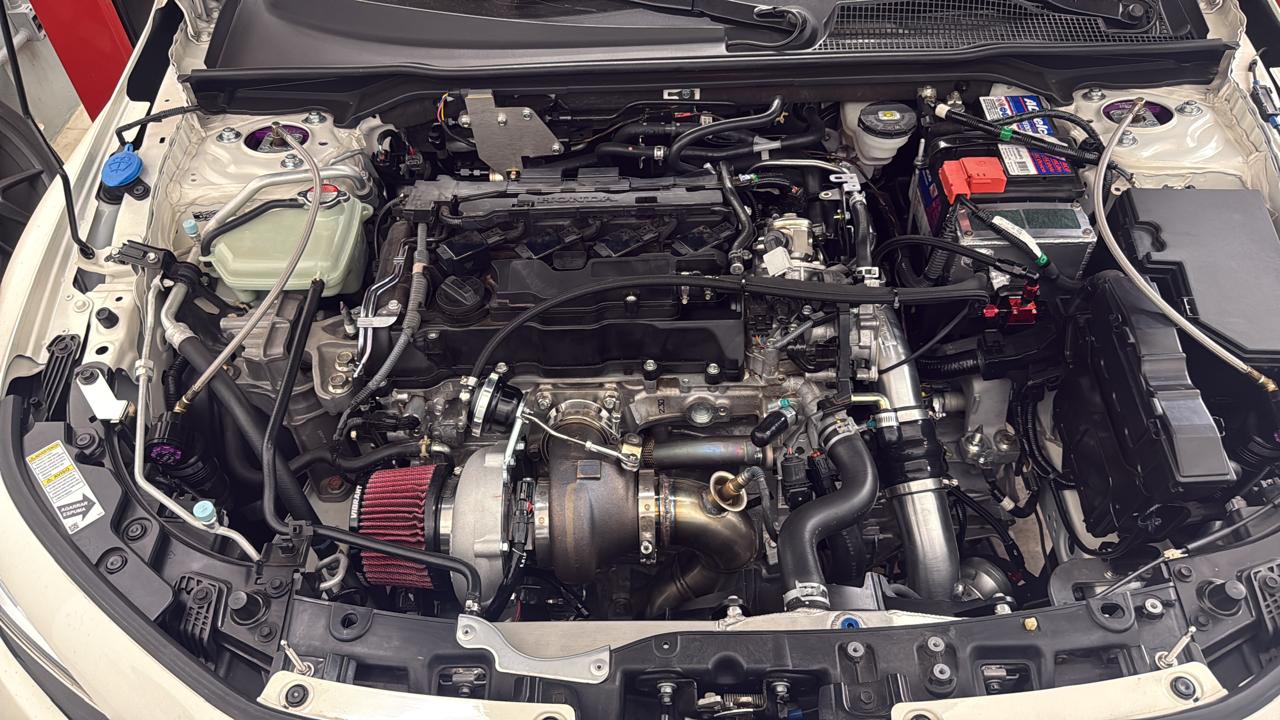
And finally put everything together...
six hours before the event started. lol.
I had a lot of delays because of the garbage RV6 bushing setup that broke, followed by the Powerflex bushings that couldn't even handle one track day on shitty tires.
I'll talk about that mess in another topic.

Tuning
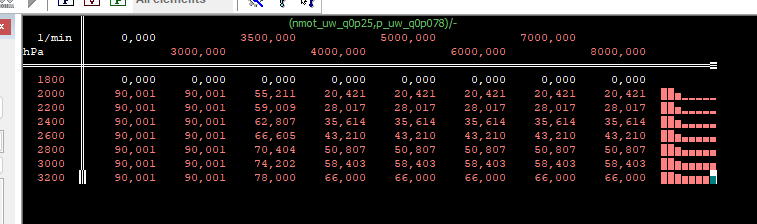
Tuning-wise, since there wasn't much time left, I patched the ECU to output a given wastegate duty cycle based on boost target.
That way I could control boost through my custom map switch instead of having a single fixed boost setting.
I basically used the first day of the event to tweak the duty cycle table, and it worked out surprisingly well.
It was also stupid hot, so I rerouted the windshield washer system to spray the radiator.
That ended up taking a lot of my attention during the flying lap because I was manually managing it, but it actually worked really well at bringing the temperatures down.

Here's a very low-quality video of the lap. I'll upload a proper one later.
And before anyone gets confused by the dash:
my oil temperature gauge is patched to display actual lambda, which is why it's showing around 77–78 most of the time.
Well... he has no clue.
The MAF sensor is not used directly to calculate load. On Bosch ECUs, the MAF is used to calculate manifold pressure, and then the ECU does some math based on things like camshaft timing and exhaust pressure to determine how much air is actually trapped inside the cylinder.
So, if the MAF is being used to calculate intake manifold pressure, why don't we just use the actual MAP sensor reading instead?
Well, if you disconnect the MAF sensor and drive the car, you'll notice that it actually drives pretty well. That's because once a MAF fault is detected, the ECU switches over to the MAP sensor in the intake manifold to determine load instead of using FUPSRL, which is calculated.
But I obviously don't want to drive around with a CEL on. So what do we do?
Fortunately, Bosch basically paved the road for us.
All you have to do is disable the MAF sensor via codeword, and all the MAF-related diagnostics go away.
Actually disconnecting the sensor is another story, though.
One of the four wires going to the MAF is connected to the intake air temperature sensor. When you disconnect the MAF assembly, you also lose that temperature reading, and the ECU replaces it with a calculated value.
I couldn't find a codeword to make that transition cleanly, so a little bit of patching was necessary. I replaced the sensor value with the ECU's calculated value and that was it.
MAF gone, no CEL, and the ECU operates using the MAP-based strategy that Bosch already implemented.
PWG conversion
The PWG part was a little more fun.
I've used the canister valve output to control other stuff for a long time, so that was my first logical choice for controlling the wastegate solenoid.
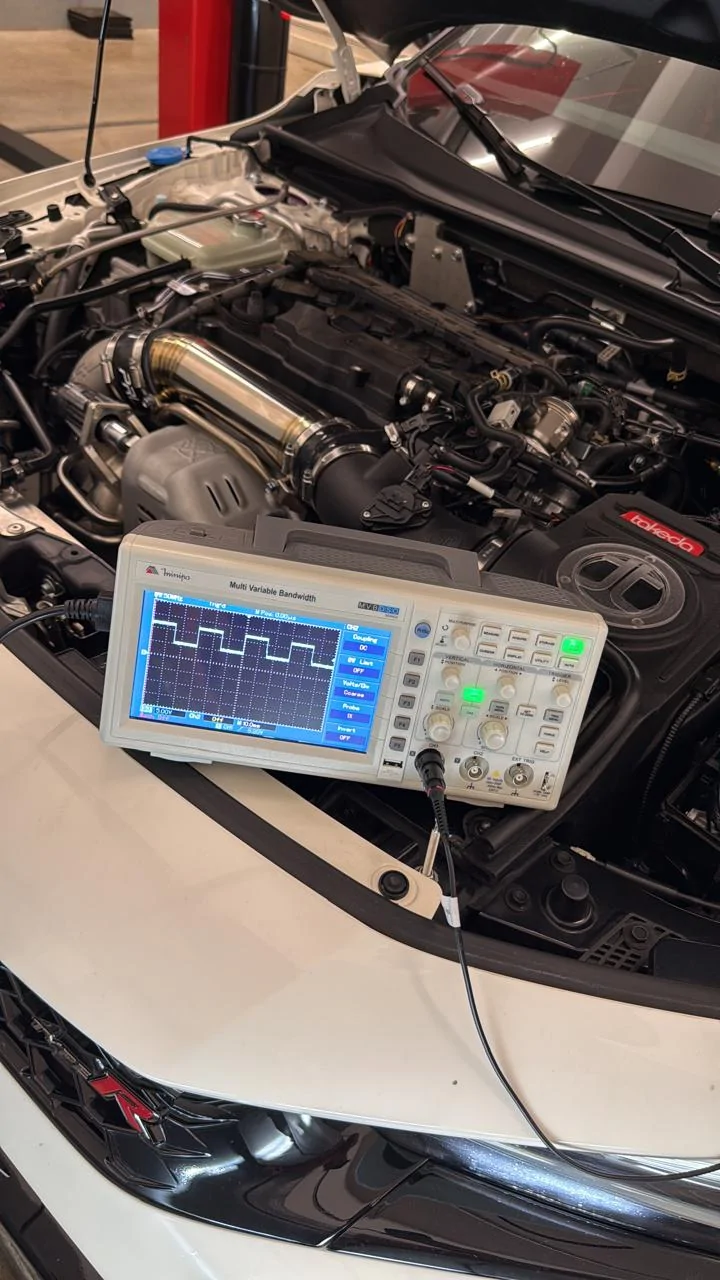
It worked like a charm on the first try.
I tested the output between 10 and 100 Hz and the signal was clean, so I decided to go ahead with the project.
This was about 10 days before the Time Attack, by the way.
I 3D printed some parts for test fitting and installed the Chinese turbo.
I hate counterfeit stuff, and honestly I assumed the turbo would be garbage. The idea was just to use it to prove that the whole system worked. If it didn't, I could shelve the project, put the stock turbo back on, and move on.
I was wrong, BTW. The turbo actually works pretty well.
Once I knew everything fit, I moved on to machining the final part out of 304 stainless:
Then I "hackjobbed" a downpipe:
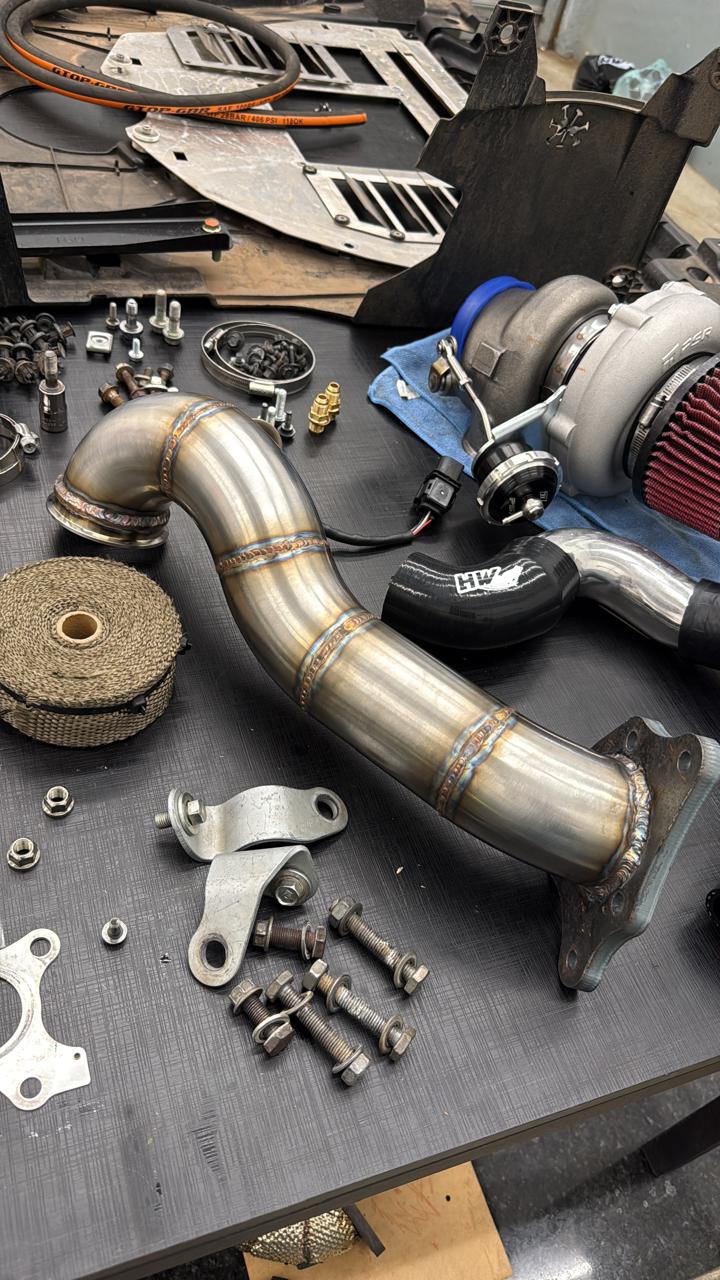
And finally put everything together...
six hours before the event started. lol.
I had a lot of delays because of the garbage RV6 bushing setup that broke, followed by the Powerflex bushings that couldn't even handle one track day on shitty tires.
I'll talk about that mess in another topic.
Tuning
Tuning-wise, since there wasn't much time left, I patched the ECU to output a given wastegate duty cycle based on boost target.
That way I could control boost through my custom map switch instead of having a single fixed boost setting.
I basically used the first day of the event to tweak the duty cycle table, and it worked out surprisingly well.
It was also stupid hot, so I rerouted the windshield washer system to spray the radiator.
That ended up taking a lot of my attention during the flying lap because I was manually managing it, but it actually worked really well at bringing the temperatures down.
Here's a very low-quality video of the lap. I'll upload a proper one later.
And before anyone gets confused by the dash:
my oil temperature gauge is patched to display actual lambda, which is why it's showing around 77–78 most of the time.
Last edited: