Sponsored

FL5 Track Cooling Experiment: Portable Water Misting the Condenser/Radiator & Intercooler (Data from 99°F Texas HPDE)

AZCWTypeR

Senior Member
Joined
Feb 6, 2024
Threads
6
Messages
510
Reaction score
412
Location
Yavapi County, AZ
Vehicle(s)
2024 Type R
Rain water is soft BTW. If using hard tap water, you'll eventually deposit a thin calcium layer on the cooling fins. The buildup may not happen quickly, but something to consider.
I've removed calcium on aluminum humidifier cores with vinegar, but you erode the aluminum too.
Also, distilled water tends to be corrosive. De-ionized water is a better bet.
Sponsored


 
OP
OP
johnloov

johnloov

Senior Member
First Name
John
Joined
Jul 9, 2024
Threads
4
Messages
434
Reaction score
483
Location
USA
Vehicle(s)
FL5
Thank you for feedback - I’ll just use tap water for track days - I’ll update if I see any issues
 

dwag88

Member
First Name
David
Joined
May 11, 2025
Threads
0
Messages
45
Reaction score
61
Location
Chattanooga, TN
Vehicle(s)
2024 CW CTR, 2022 Tesla MY LR, 2023 GMC Sierra 5.3 (work)
Definitely use distilled water. People ruin their outdoor AC units trying to spray them with hoses during heat waves. It works until calcium carbonate deposits accumulate on the fins of the radiator. Once that happens it’s trash and needs to be replaced.
 

Ph8ed4life

Senior Member
First Name
Matt
Joined
Mar 6, 2025
Threads
3
Messages
153
Reaction score
128
Location
AZ
Vehicle(s)
2025 CW CTR
My experience isn't racing related, but definitely supports what you're seeing:

A friend and I used mister systems on our cars to help our AC systems 'feel' better during the hottest of the hot summer days here in southern AZ. 20 years ago, His EK civic started with one system under hood that he could control via wired switch. At first, it was only on the AC condenser and it made noticeable improvement in the cabin while driving. He expanded it to the engine cooling radiator and used it on long, sustained uphill stretches he commuted in the afternoon.

I do think your use of the heater to reject more heat is smart. Thank you for sharing all with the community!
 

nttran98

Senior Member
First Name
Nhan
Joined
Apr 29, 2022
Threads
2
Messages
193
Reaction score
93
Location
US
Vehicle(s)
2026 FL5
Definitely use distilled water. People ruin their outdoor AC units trying to spray them with hoses during heat waves. It works until calcium carbonate deposits accumulate on the fins of the radiator. Once that happens it’s trash and needs to be replaced.
This is what I was trying to convey, but me no EnGrisk


kjechel

Member
Joined
Mar 1, 2024
Threads
0
Messages
10
Reaction score
8
Location
CA Central Coast
Vehicle(s)
03 S2000 original owner, 24 ITS ABP/Ebony
Definitely use distilled water. People ruin their outdoor AC units trying to spray them with hoses during heat waves. It works until calcium carbonate deposits accumulate on the fins of the radiator. Once that happens it’s trash and needs to be replaced.
If using tap water, shutting off the spray on the cool down lap should allow the calcium-rich water to be blown off the fins and may help minimize potential buildup.
 

CG13

Senior Member
Joined
Feb 7, 2024
Threads
6
Messages
121
Reaction score
137
Location
Houston
Vehicle(s)
2024 FL5 Civic Type R
Where is the coolant temperature reading taken? Is there any risk it’s being influenced by the spray but the actual temp is higher away from the sensor?

Example would be in a home if the thermostat is in a closed room, temps can be regulated in that room but not the rest of the home without some built in offset.

I ask because the temp difference you’re showing is higher than I would expect.
 
OP
OP
johnloov

johnloov

Senior Member
First Name
John
Joined
Jul 9, 2024
Threads
4
Messages
434
Reaction score
483
Location
USA
Vehicle(s)
FL5
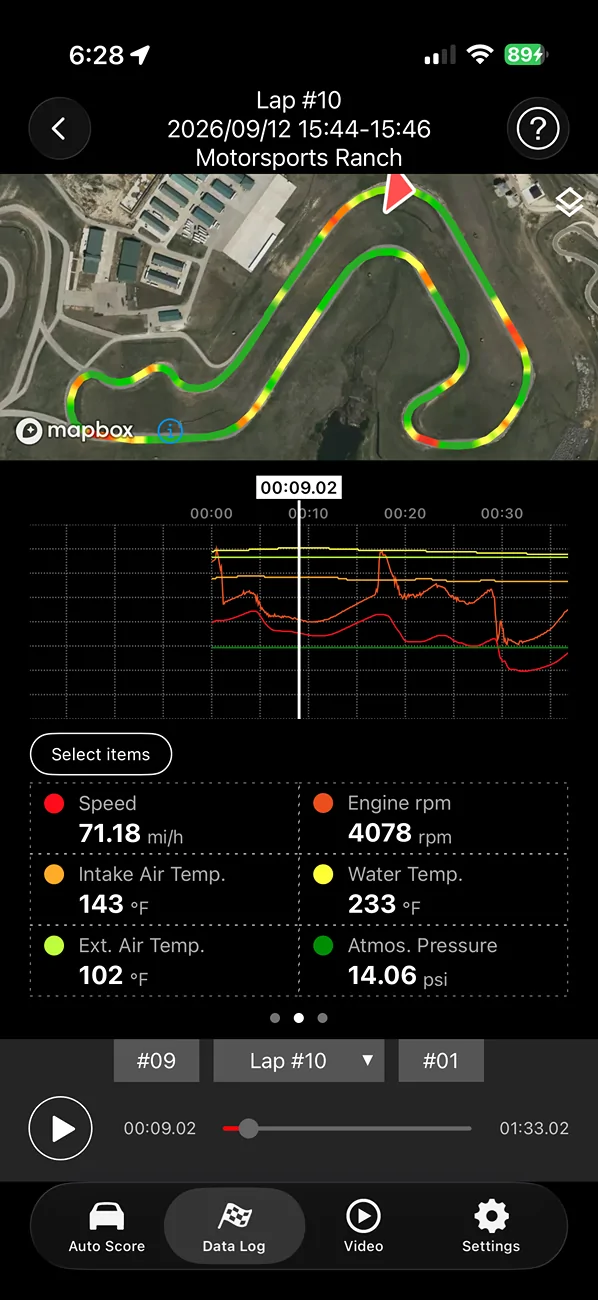
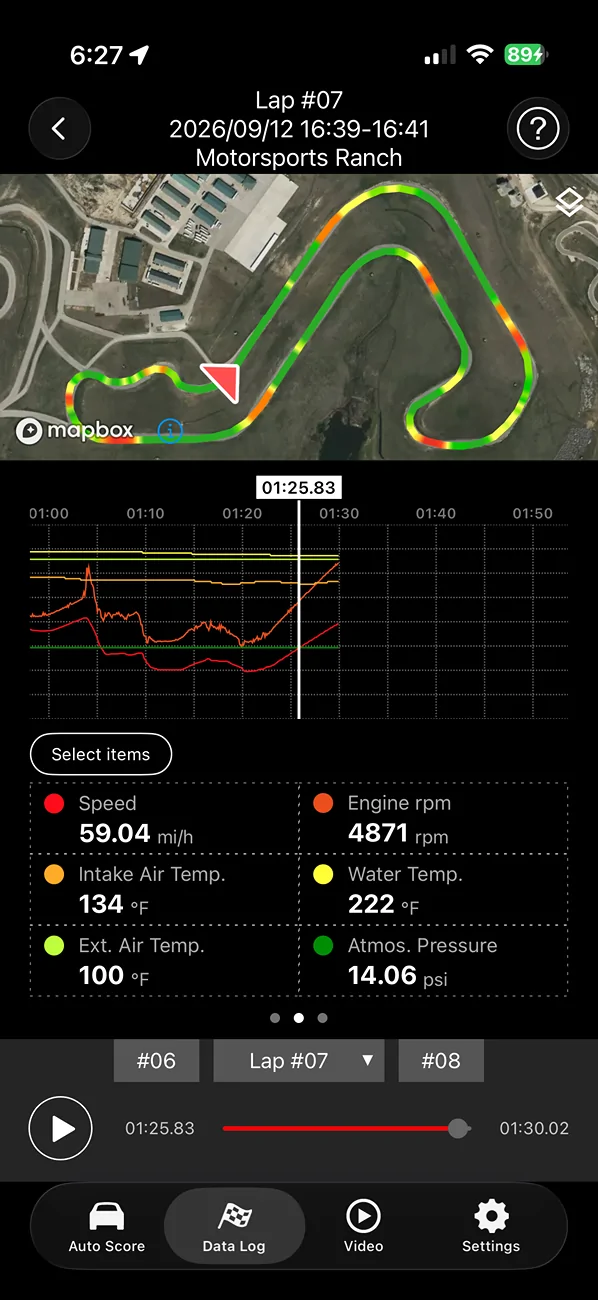
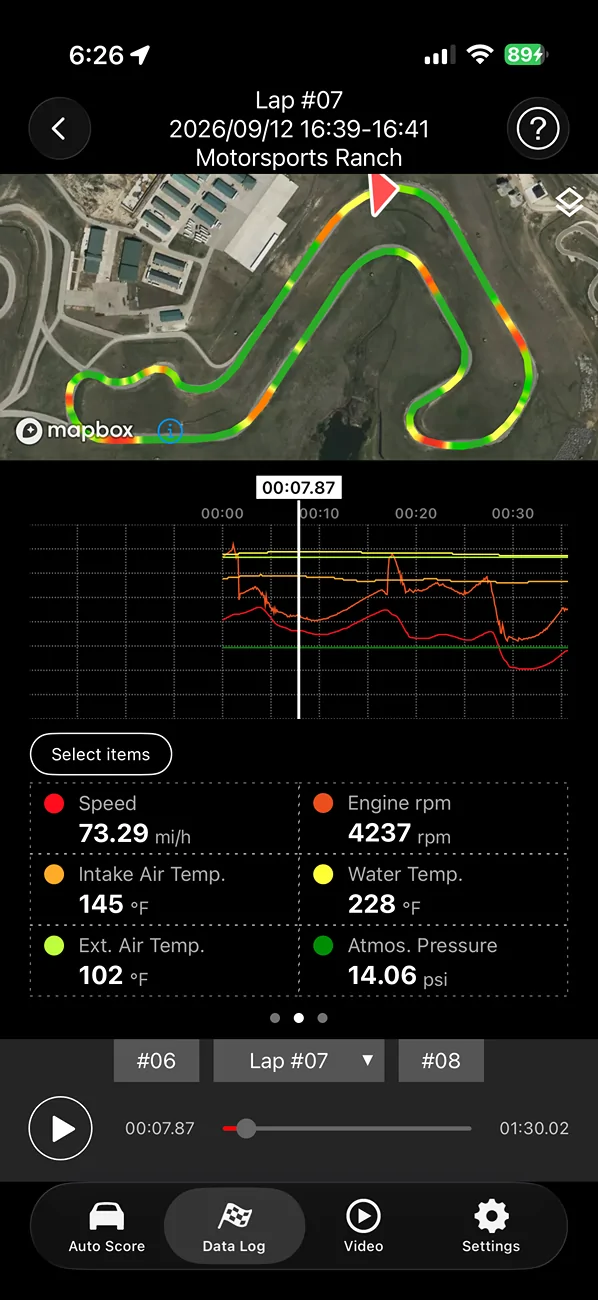
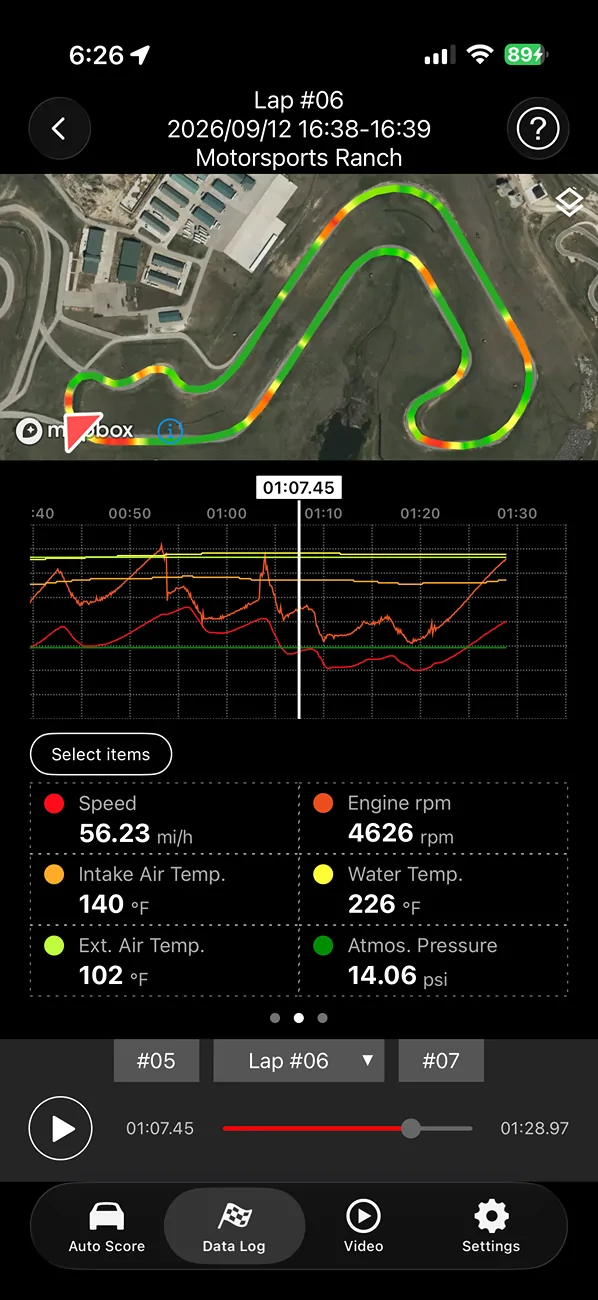
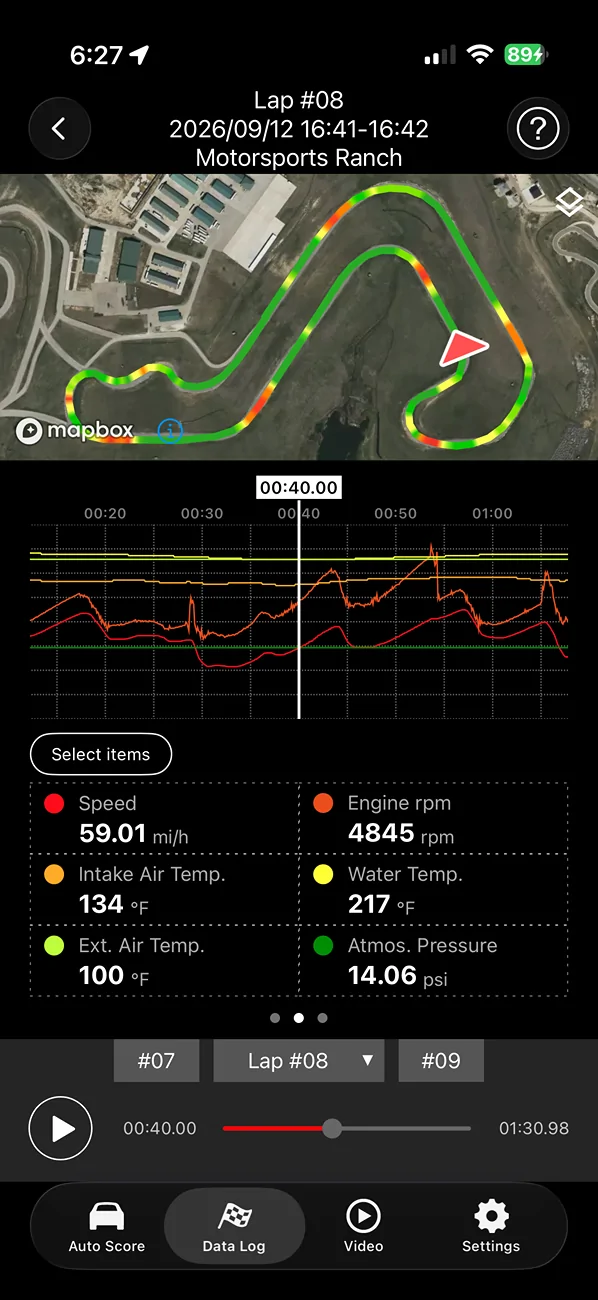
Here were the latest results, on a scotching 100+F day in Texas on a smaller track in Texas. My only mods were water mister, I did remove the rain guard ( not sure if it did anything) , and same a/c off, max heat, fan off - Mister was on full time 20-25 minute sessions at full pace.

Here are screen shots of the hottest areas, slowest speeds on track. Car didn't heat soak, and cooled off very fast after session, and during straights with more air.

Also another thing I noticed, without the mister, getting off track, it would take a while for the A/C to cool down, now it takes seconds, which means to me, it is effectively cooling the Condenser Unit and Radiator. I may add two more sprayers directly between the A/C and Radiator stack to see if that helps even further.

11th Gen Honda Civic FL5 Track Cooling Experiment: Portable Water Misting the Condenser/Radiator & Intercooler (Data from 99°F Texas HPDE) IMG_4543
11th Gen Honda Civic FL5 Track Cooling Experiment: Portable Water Misting the Condenser/Radiator & Intercooler (Data from 99°F Texas HPDE) IMG_4539
11th Gen Honda Civic FL5 Track Cooling Experiment: Portable Water Misting the Condenser/Radiator & Intercooler (Data from 99°F Texas HPDE) IMG_4538
11th Gen Honda Civic FL5 Track Cooling Experiment: Portable Water Misting the Condenser/Radiator & Intercooler (Data from 99°F Texas HPDE) IMG_4537
11th Gen Honda Civic FL5 Track Cooling Experiment: Portable Water Misting the Condenser/Radiator & Intercooler (Data from 99°F Texas HPDE) IMG_4541


Here is the AI Summary:

After digging deeper into the FL5 cooling architecture, I think the most interesting part of this experiment is that the radiator is doing much more than simply controlling “water temperature.” The K20C1 uses a factory oil-to-coolant heat exchanger, and the 6-speed transmission also uses a coolant-to-transmission-fluid heat exchanger. When the car is cold, coolant helps bring the oil and transmission fluid up to temperature faster; under sustained track load, the direction reverses and heat from the engine oil and transmission is transferred into the coolant. Ultimately, the radiator is the common heat sink that has to reject much of that energy to the atmosphere. So keeping coolant temperature under control potentially benefits the engine, engine oil and transmission simultaneously.

That is why I experimented with improving the efficiency of the stock system rather than immediately stacking more heat exchangers in front of each other. My car still has the OEM radiator, intercooler, engine-oil heat exchanger and transmission heat exchanger. I run the heater continuously as an auxiliary radiator and use a simple water-misting system with four nozzles across the condenser/radiator area and two across the intercooler. The physics is straightforward: evaporation absorbs a large amount of energy, while the heater core adds another coolant-to-air heat exchanger. Instead of adding another oil cooler and another transmission cooler, I'm trying to improve the ability of Honda's existing central cooling system to dump heat.

The results so far are very encouraging. During my latest Texas testing with approximately 100–102°F ambient temperatures, LogR showed actual coolant temperatures ranging roughly 217–233°F during hard track use with the heater and mister operating continuously. More importantly, the temperature wasn't simply climbing uncontrollably—it would fall back into the low 220s and even the high teens during portions of the session, indicating the system was still rejecting heat. Across 28+ HPDE days at Laguna Seca, COTA and Texas tracks, I have never put the car into thermal limp mode or received an engine-overtemperature warning. The mister is newer, so I'm not claiming it deserves credit for all of those events, but the current setup has allowed me to complete even 20–30 minute sessions in extreme heat.

I've also been sending the engine oil for laboratory analysis rather than relying only on dashboard numbers. One recent Blackstone interval covered 2,111 miles and three track days, and they described the report as essentially spotless, with very low wear, no coolant contamination and no meaningful fuel-dilution problem. That doesn't prove the oil never gets hot, and Honda's displayed oil temperature is calculated rather than measured by a dedicated factory oil-temperature sensor, so my next step is proper instrumentation with physical oil and transmission temperature sensors. But so far the evidence suggests that improving coolant heat rejection first may be an extremely simple and cost-effective way of improving the FL5's entire thermal system—not just its coolant temperature.

-- -
Hope this helps -
For $60 - seems to work well - at some point if those radiators fail - under warranty - I'll keep factory - then after warranty - upgrade to PWR
 
Last edited:


Top