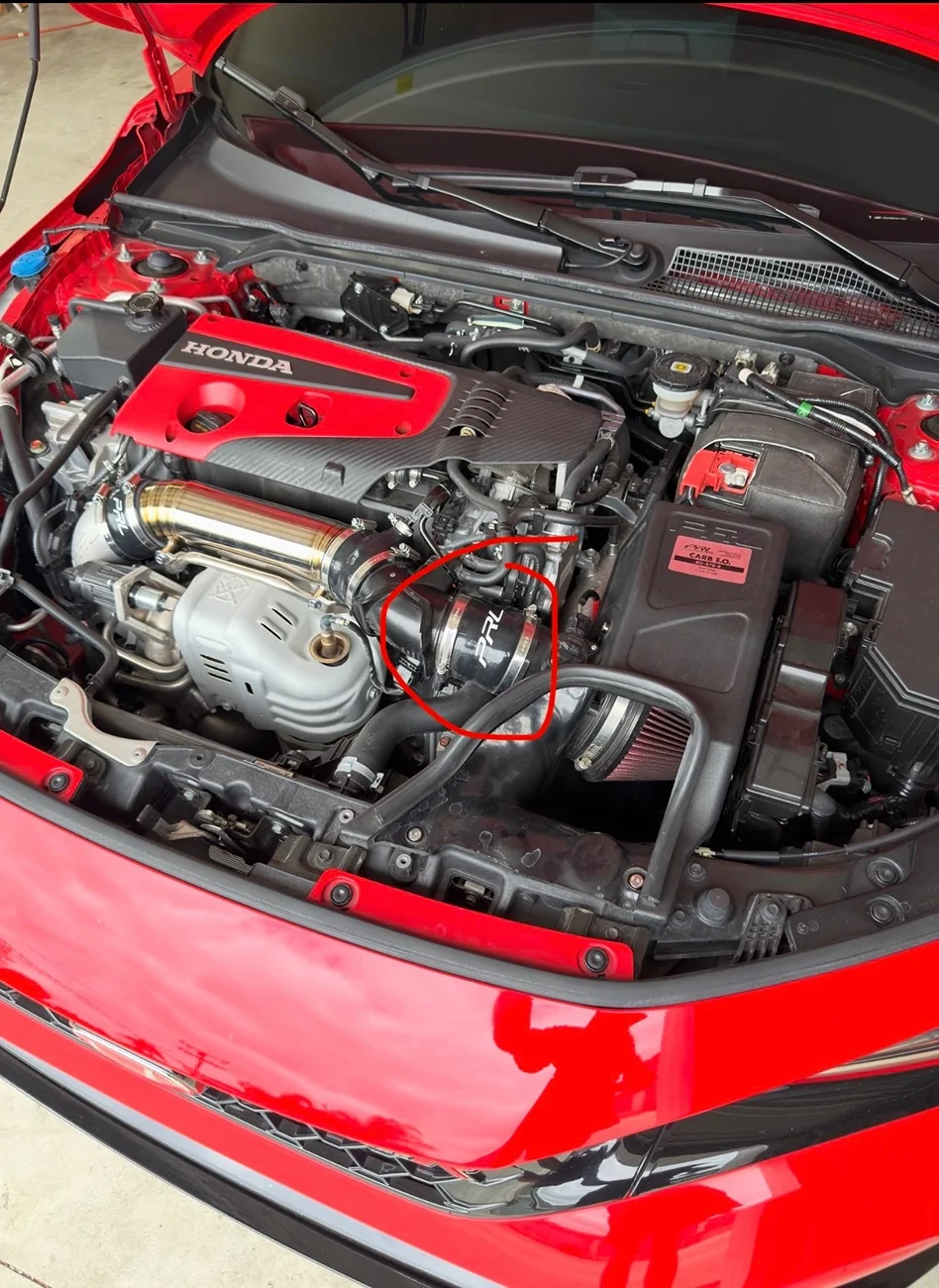
Where the hell do I stick the straw thing to spray the cleaner in? I was trying to put it in where I have circled but I could not get it far enough in the PRL silicone connector to spray into the inlet pipe. Anyone used this stuff before and got any tips?
You really should have that going right onto the throttle plate.. as far as the best way to do that service on the car - donno sry. probably need 2 ppl for this job since its fly by wire n all too..
You really should have that going right onto the throttle plate.. as far as the best way to do that service on the car - donno sry. probably need 2 ppl for this job since its fly by wire n all too..
Agreed. You really don't want to be injected where circled since that would need to go through the turbo, intercooler and long charge pipe tubing before getting to the actual intakes...if it would make it there at all. Does our car have a MAP sensor right before the intake in the back of the engine? If so, maybe remove the MAP sensor and inject it right there?
About 35k, I’m not sure haven’t had a symptoms or anything…was just going to do it preemptively. But from what some people have been saying seems like it may be a bit unnecessary.
Be prepared for a lot of smoke from the cleaner diluting oil on the cylinder walls. This treatment is not something I'd recommend.
I've manually cleaned motorcycle intake valves with cleaner and brushes. Even with the valves closed, cleaner leaks into the cylinders. Probably bad for the rings...
Be prepared for a lot of smoke from the cleaner diluting oil on the cylinder walls. This treatment is not something I'd recommend.
I've manually cleaned motorcycle intake valves with cleaner and brushes. Even with the valves closed, cleaner leaks into the cylinders. Probably bad for the rings...
they recommend changing the oil afterwards, due to oil dilution. it is a pretty violent process. I've read a few reviews of people hydrolocking their engines with it.
About 35k, I’m not sure haven’t had a symptoms or anything…was just going to do it preemptively. But from what some people have been saying seems like it may be a bit unnecessary.
I haven't seen that these engines are prone to carbon buildup. Frankly, it seems like none of Honda's DI engines are prone to carbon buildup. I wouldn't try to fix a problem that doesn't exist, you just might create a new problem.
I haven't seen that these engines are prone to carbon buildup. Frankly, it seems like none of Honda's DI engines are prone to carbon buildup. I wouldn't try to fix a problem that doesn't exist, you just might create a new problem.
Frequent oil changes with quality oil, use quality high octane fuel, avoid short trips and make sure the engine always gets to temp. These are the best things you can do although not always possible.
And don't forget, a redline a day keeps the carbon away.
Frequent oil changes with quality oil, use quality high octane fuel, avoid short trips and make sure the engine always gets to temp. These are the best things you can do although not always possible.
And don't forget, a redline a day keeps the carbon away.