
Sponsored

Nikw91

Senior Member
First Name
Niko West
Joined
Nov 3, 2023
Threads
17
Messages
490
Reaction score
460
Location
WPB, FL
Vehicle(s)
2025 CW FL5
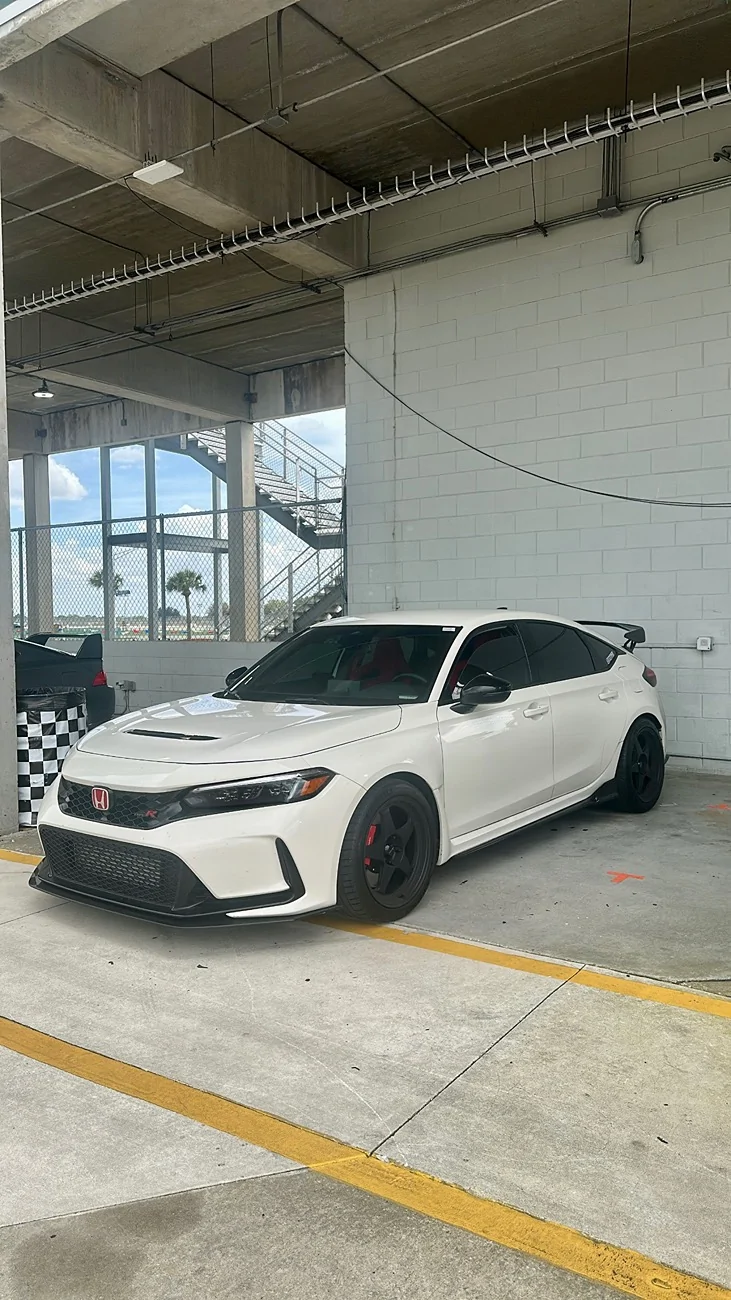
Last Thursday, I did a SCCA Track Nights at Sebring Raceway (in Florida) and the temperature was 86-87 degrees for both sessions.

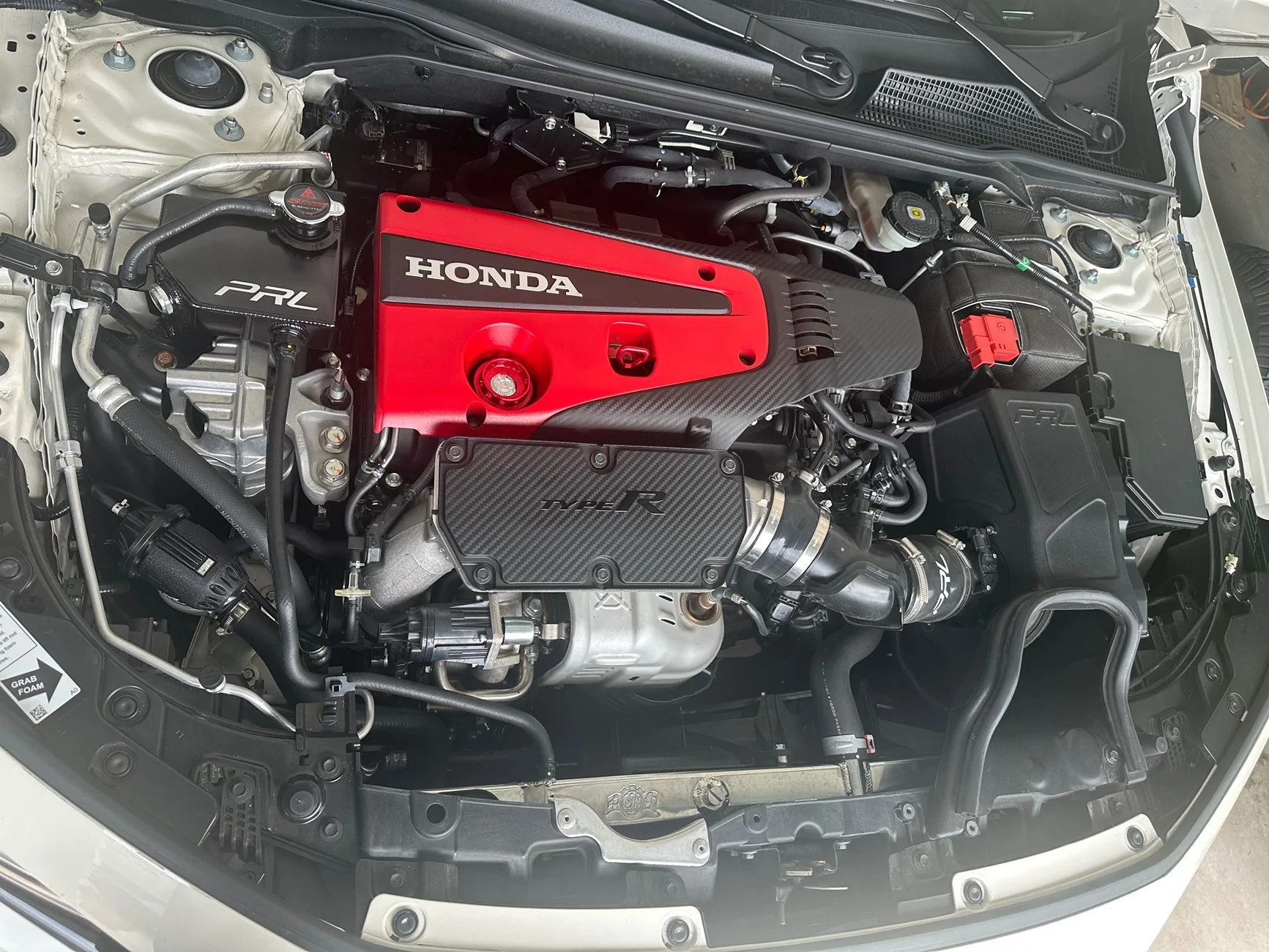
Power mods:
PRL intake with AEM filter
TSP downpipe
Jester Tuned

Cooling mods:
HKS intercooler
HEL oil cooler
CSF radiator
WOT cooling plate
Removed rain guard from hood vent

Handling mods:
Rota slipstreams with Michelin Pilot Sports


OEM brakes/fluid, OEM oil, OEM coolant. (I felt ZERO brake fade)

The first session I stayed between 211 degrees coolant temps and 221 degrees until the last lap of the 20 minute session. I eclipsed 231 degrees briefly until coasted the last third of the straight away and low RPMed it around a curve which caused coolant temps to drop to 214 degrees as I passed the checkered flag! (Dropped 17 degrees in about 12 seconds)

A new BMW M2 started behind me and I pulled away. I passed a Porsche 718 and was about to pass a CT4-V Blackwing but the session was ending.

Session two i never went above 221 degees for whatever reason, I think I was just driving smoother and used less engine braking.

A new Chevy Corvette Stingray started behind me this round but I pulled away from him and ended up passing a Mustang GT350 before catching up to an old Corvette at the end of the session.

I am pretty much done with the car other then I have Hondata Canflex and Spoon Springs to be installed. But kinda iffy on keeping or selling. So my questions:

Do springs make a big difference with handling?

Would 5W30 oil help at all?

Would running E30 help lower temps as all?


11th Gen Honda Civic No overheating on 87 degree Sebring Track Day BB3C90CA-B761-40AB-A919-9124B70E3E0C
11th Gen Honda Civic No overheating on 87 degree Sebring Track Day IMG_0742


(Sorry for fat fingering my steering wheel)


Corvette almost losing it
 
Last edited:

optronix

Senior Member
Joined
Apr 5, 2023
Threads
2
Messages
685
Reaction score
1,016
Location
Mid-Atlantic
Vehicle(s)
2024 Integra Type S, 2023 Macan GTS
On the springs- I've given this spiel many times. But installing springs alone will actually negatively impact the handling, pretty significantly to my experience. You will find yourself with more negative camber in the rear than the front (~2.5 degrees in the rear, ~1.5 in the front), which will lead to understeer when driven hard. Most people who just drive on the street will probably never notice, but I noticed IMMEDIATELY during my first autocross. To put it bluntly- it sucked. But I was at least aware of a fix- more front camber.

However, that's not the whole picture. You're still altering the suspension geometry in ways that were not accounted for in the original design. In other words, you're effectively taking a sledgehammer to all the excellent work the expert engineers at Honda did when they designed and tested the car.

That said, the engineers do have to account for a certain amount of compromises on a road car so there is room for improvement. But slapping springs on it is not enough. Not by a long shot. I'm still trying to figure it out myself... but I do at least feel like the net results of my tinkering are now positive vs what the car was capable of stock. And all I've done is add 200 TW tires, lower ball joints (for -3.5 degrees in the front), and a DSC controller that is yet untested in autocross/track conditions. Some people have apparently had success with just springs and pulling the strut pins for the extra .3 degrees of camber it offers... YMMV. But just be aware that you're probably better off leaving it stock as long as you can before you recognize CLEAR AND OBVIOUS limitations.

Speaking of which... the fact you're not seeing any brake fade implies you're not driving the car hard enough. This is likely to change the more seat time you get. It sure as hell did for me. Once I learned how much faster you can be if you use the brakes more effectively, that was it and I've been actively holding myself back unless I've done a complete brake overhaul (which I have not). Again- I'm not the fastest, most experienced driver by any stretch- but the one track day I had (also Track Night in America ironically) at Dominion Raceway near Richmond, VA, I noticed a slight bit of fade after my second 20 minute session. And as I mentioned I was actively letting off at the last third of the longest straight, and not pushing the pace like I would if I had higher confidence in the brakes.

Also final note, as this all sort of ties together. Tires. All my actual track experience was on the OEM PS4S. If I was on the RT660+ I swapped to last summer, the brakes would have been toast. The single largest upgrade you can do at this point is 200 TW tires. At that point, EVERYTHING changes.

But one step at a time. I think most folks would suggest you burn through your OEM rubber getting to know your driving and your car.
 
OP
OP
Nikw91

Nikw91

Senior Member
First Name
Niko West
Joined
Nov 3, 2023
Threads
17
Messages
490
Reaction score
460
Location
WPB, FL
Vehicle(s)
2025 CW FL5
On the springs- I've given this spiel many times. But installing springs alone will actually negatively impact the handling, pretty significantly to my experience. You will find yourself with more negative camber in the rear than the front (~2.5 degrees in the rear, ~1.5 in the front), which will lead to understeer when driven hard. Most people who just drive on the street will probably never notice, but I noticed IMMEDIATELY during my first autocross. To put it bluntly- it sucked. But I was at least aware of a fix- more front camber.

However, that's not the whole picture. You're still altering the suspension geometry in ways that were not accounted for in the original design. In other words, you're effectively taking a sledgehammer to all the excellent work the expert engineers at Honda did when they designed and tested the car.

That said, the engineers do have to account for a certain amount of compromises on a road car so there is room for improvement. But slapping springs on it is not enough. Not by a long shot. I'm still trying to figure it out myself... but I do at least feel like the net results of my tinkering are now positive vs what the car was capable of stock. And all I've done is add 200 TW tires, lower ball joints (for -3.5 degrees in the front), and a DSC controller that is yet untested in autocross/track conditions. Some people have apparently had success with just springs and pulling the strut pins for the extra .3 degrees of camber it offers... YMMV. But just be aware that you're probably better off leaving it stock as long as you can before you recognize CLEAR AND OBVIOUS limitations.

Speaking of which... the fact you're not seeing any brake fade implies you're not driving the car hard enough. This is likely to change the more seat time you get. It sure as hell did for me. Once I learned how much faster you can be if you use the brakes more effectively, that was it and I've been actively holding myself back unless I've done a complete brake overhaul (which I have not). Again- I'm not the fastest, most experienced driver by any stretch- but the one track day I had (also Track Night in America ironically) at Dominion Raceway near Richmond, VA, I noticed a slight bit of fade after my second 20 minute session. And as I mentioned I was actively letting off at the last third of the longest straight, and not pushing the pace like I would if I had higher confidence in the brakes.

Also final note, as this all sort of ties together. Tires. All my actual track experience was on the OEM PS4S. If I was on the RT660+ I swapped to last summer, the brakes would have been toast. The single largest upgrade you can do at this point is 200 TW tires. At that point, EVERYTHING changes.

But one step at a time. I think most folks would suggest you burn through your OEM rubber getting to know your driving and your car.
Makes a ton of sense. I love the way the car handles. So I thought the Spoon springs being roughly 20% stiffer then oem and then an even 0.8” drop all around would give the car a lower center of gravity and help with handling. Most after market springs are 0.2” to 0.3” lower in the front and have way different then OEM spring rates whether it’s softer front and stiffer rear or 50-60% stiffer.

I don’t want to go down that rabbit hole and having to order a bunch of other suspension parts. Maybe I’ll sell the springs and leave it.

These new 18s with Michelin PS4S were night and day more traction then the 19 PS4S for some reason
 

AZCWTypeR

Senior Member
Joined
Feb 6, 2024
Threads
6
Messages
451
Reaction score
350
Location
Yavapi County, AZ
Vehicle(s)
2024 Type R
You're doing well if not getting brake fade at Sebring. I have FL friends that track there. Many slow corners preceded by heavy braking.
 
OP
OP
Nikw91

Nikw91

Senior Member
First Name
Niko West
Joined
Nov 3, 2023
Threads
17
Messages
490
Reaction score
460
Location
WPB, FL
Vehicle(s)
2025 CW FL5
You're doing well if not getting brake fade at Sebring. I have FL friends that track there. Many slow corners preceded by heavy braking.
I’m just going out there to have fun.

I do push the car but I also don’t go absolutely all out slamming on the brakes at the last second into every corner the whole session.

If you watch the videos, I try to be more smooth then anything. Still learning!


gakhar

Member
Joined
May 23, 2025
Threads
0
Messages
31
Reaction score
19
Location
BC
Vehicle(s)
2008 Civic Si, 2025 Civic Type R
On the springs- I've given this spiel many times. But installing springs alone will actually negatively impact the handling, pretty significantly to my experience. You will find yourself with more negative camber in the rear than the front (~2.5 degrees in the rear, ~1.5 in the front), which will lead to understeer when driven hard. Most people who just drive on the street will probably never notice, but I noticed IMMEDIATELY during my first autocross. To put it bluntly- it sucked. But I was at least aware of a fix- more front camber.

However, that's not the whole picture. You're still altering the suspension geometry in ways that were not accounted for in the original design. In other words, you're effectively taking a sledgehammer to all the excellent work the expert engineers at Honda did when they designed and tested the car.

That said, the engineers do have to account for a certain amount of compromises on a road car so there is room for improvement. But slapping springs on it is not enough. Not by a long shot. I'm still trying to figure it out myself... but I do at least feel like the net results of my tinkering are now positive vs what the car was capable of stock. And all I've done is add 200 TW tires, lower ball joints (for -3.5 degrees in the front), and a DSC controller that is yet untested in autocross/track conditions. Some people have apparently had success with just springs and pulling the strut pins for the extra .3 degrees of camber it offers... YMMV. But just be aware that you're probably better off leaving it stock as long as you can before you recognize CLEAR AND OBVIOUS limitations.

Speaking of which... the fact you're not seeing any brake fade implies you're not driving the car hard enough. This is likely to change the more seat time you get. It sure as hell did for me. Once I learned how much faster you can be if you use the brakes more effectively, that was it and I've been actively holding myself back unless I've done a complete brake overhaul (which I have not). Again- I'm not the fastest, most experienced driver by any stretch- but the one track day I had (also Track Night in America ironically) at Dominion Raceway near Richmond, VA, I noticed a slight bit of fade after my second 20 minute session. And as I mentioned I was actively letting off at the last third of the longest straight, and not pushing the pace like I would if I had higher confidence in the brakes.

Also final note, as this all sort of ties together. Tires. All my actual track experience was on the OEM PS4S. If I was on the RT660+ I swapped to last summer, the brakes would have been toast. The single largest upgrade you can do at this point is 200 TW tires. At that point, EVERYTHING changes.

But one step at a time. I think most folks would suggest you burn through your OEM rubber getting to know your driving and your car.
I haven’t installed my Spoon springs yet either but a lot of the spring installs I’ve seen have seen result in them getting an OEM alignment done afterwards, am I missing something? I’m not great with suspension stuff.
 

AZCWTypeR

Senior Member
Joined
Feb 6, 2024
Threads
6
Messages
451
Reaction score
350
Location
Yavapi County, AZ
Vehicle(s)
2024 Type R
Lowering springs can change alignment by a lot. For example, my son lowered a 90's Corolla 2" and the toe went from 0" to plus 2-1/2". Luckily the tie rods weren't frozen, so we could easily adjust back to 0" toe.

OEM alignment probably best for the street. Racing alignment can vary depending on driving style and track.
 

Chilly613

Senior Member
Joined
Nov 5, 2022
Threads
13
Messages
1,022
Reaction score
1,205
Location
Southern California
Vehicle(s)
2025 FL5 Civic Type R
Build Thread
Link
I haven’t installed my Spoon springs yet either but a lot of the spring installs I’ve seen have seen result in them getting an OEM alignment done afterwards, am I missing something? I’m not great with suspension stuff.
Any changes to the suspensions geometry, you should be getting an alignment afterwards.
 

gakhar

Member
Joined
May 23, 2025
Threads
0
Messages
31
Reaction score
19
Location
BC
Vehicle(s)
2008 Civic Si, 2025 Civic Type R
Any changes to the suspensions geometry, you should be getting an alignment afterwards.
Yes for sure, which is why I’m not really understanding what Optronix means. Wouldn’t getting an alignment nullify the issues with being out of spec that he’s talking about? Sure it’s not OEM ride height but your camber and toe should still be OEM right?
 

Chilly613

Senior Member
Joined
Nov 5, 2022
Threads
13
Messages
1,022
Reaction score
1,205
Location
Southern California
Vehicle(s)
2025 FL5 Civic Type R
Build Thread
Link
Yes for sure, which is why I’m not really understanding what Optronix means. Wouldn’t getting an alignment nullify the issues with being out of spec that he’s talking about? Sure it’s not OEM ride height but your camber and toe should still be OEM right?
Before this thread gets hijacked any further, I would recommend to do more research regarding suspension, with suspension there is usually a cause and effect with changing things. The camber and toe being at OEM, means it works with the OEM height of the car. Lowering your car, you are no longer at OEM height and the camber and toe will not be correctly positioned.
 
Last edited:


gakhar

Member
Joined
May 23, 2025
Threads
0
Messages
31
Reaction score
19
Location
BC
Vehicle(s)
2008 Civic Si, 2025 Civic Type R
Before this thread gets hijacked any further, I would recommend to do more research regarding suspension, with suspension there is usually a cause and effect with changing things. The camber and toe being at OEM, means it works with the OEM height of the car. Lowering your car, you are no longer at OEM height and the camber and toe to not be correctly positioned.
Sorry didn't mean to derail, any suggestions on where to look for research on that kind of stuff? Very new to this and wanting to learn, so just asking questions from an educational standpoint and not to challenge anyone.
 
OP
OP
Nikw91

Nikw91

Senior Member
First Name
Niko West
Joined
Nov 3, 2023
Threads
17
Messages
490
Reaction score
460
Location
WPB, FL
Vehicle(s)
2025 CW FL5
Sorry didn't mean to derail, any suggestions on where to look for research on that kind of stuff? Very new to this and wanting to learn, so just asking questions from an educational standpoint and not to challenge anyone.
You bring up a good point.

Do I need aftermarket LCAs to run stock camber on aftermarket springs? Or will I have to upgrade them?
 

Chilly613

Senior Member
Joined
Nov 5, 2022
Threads
13
Messages
1,022
Reaction score
1,205
Location
Southern California
Vehicle(s)
2025 FL5 Civic Type R
Build Thread
Link
Sorry didn't mean to derail, any suggestions on where to look for research on that kind of stuff? Very new to this and wanting to learn, so just asking questions from an educational standpoint and not to challenge anyone.
Google, would probably be a good start.

This video is really good gives a lot of information.


optronix

Senior Member
Joined
Apr 5, 2023
Threads
2
Messages
685
Reaction score
1,016
Location
Mid-Atlantic
Vehicle(s)
2024 Integra Type S, 2023 Macan GTS
The thread is not derailed; suspension was brought up in the original post.

First, a disclaimer- I'm not an expert. Just a dude trying to be a dude pretending to be a dude who knows about suspension. But I do have anecdotal evidence of things I've done to my specific car, which is relevant. But I'd encourage folks to do their due diligence and feel free to report back if anything I say here is false. It will never be my intention to mislead, but hopefully my experience can help someone.

That out of the way- you can of course adjust the camber. Just not without buying stuff lol. There's no way to adjust the camber from the factory (you can pull the strut tower pins and adjust the top of the strut that way- but that's not an "official" adjustment methodology and you can only gain about .5 degree, likely less).

So you have two options- return to close to stock, or lean in with more aggressive camber. Or, a third and do nothing. MANY people have done the do nothing route (including myself). And many people have suffered no ill consequence. I did only because I actually take my car to autocross, which is a hell of a lot more demanding than street driving or even backroads. Although I'd recommend adjusting the camber if you frequently carve up backroads or canyons.

Anyway. Return to near stock camber settings- a variety of companies offer rear camber arms that are adjustable, look to spend another ~$300. Should be a pretty straightforward install but haven't done it myself. You will need an alignment rack to dial in the camber, I wouldn't recommend eyeballing it. The short explanation for why you only need rear camber adjustment because of the difference in suspension geometry between McPherson struts up front and multi-link out back. That's all according to the masters' plan in how the suspension is designed and what helps give it that wonderful lift-off oversteer even in stock form- but also what will make you want to rip your hair out when it pushes through cones during an autocross after you lower it (and do nothing else).

Adding more front camber- you have a couple choices there too. Most people go the route of adjustable lower ball joints. There's several options out there, but it seems like EVS is the way to go, as they all function pretty much exactly the same and the EVS are cheaper by a longshot. You can also elect to get camber plates that mount to the strut tower, sometimes referred to as "top hats". I used to think you pretty much had to have coilovers to go this route but that's apparently not the case and you can buy them independently. I have yet to do more research on this but even if you do the coil route, you still have to buy them separately in most cases I could see. Ohlins for example doesn't appear to offer their own camber plates, but Sakebomb does and I see a lot of folks use that combo. Personally, that's what I'd recommend... because one other component I'm not going to get too deep into is roll center adjusters. I've noticed more bump steer recently with the addition of a DSC controller that resulted in less damping (by default- I'm not going to get into DSC controller science for the time being as that IS off-topic...). Anyway, I have yet to account for the bump steer-inducing mechanics of the front lower control arms being at an "elevated" angle from what it was originally designed for, which leads to the toe "moving" when compressed; i.e., bump steer.

I'm probably not articulating that right, but it's annoying. And the only way to fix it on this platform (that I'm aware of) is with an elongated ball joint. Which I can't use because I need the adjustable ball joints for my front camber... which is why I don't think I'm done with my suspension tweaking, even though I like it. (Although I do go through tires at an alarming rate, and I'm still chasing that part down too... it might have something to do with -3.5 degrees of front camber. Just saying there's a chance.)

But the last thing I'll leave you with is I've never noticed a single more significant modification in handling than when adding more camber. It was a revelation. I never even really understood what "turn in" meant until I experienced it at my first autocross after adding the camber. I went from finishing in the middle of the pack, to being right back up there where I used to be with my Porsches.

But if you're not doing any type of competitive stuff you could skip all that and just bring the rear camber back to ~1-1.5 degrees and the car should behave very similarly to stock. Aside from the roll-center part but you could fix that with new ball joints.
 

optronix

Senior Member
Joined
Apr 5, 2023
Threads
2
Messages
685
Reaction score
1,016
Location
Mid-Atlantic
Vehicle(s)
2024 Integra Type S, 2023 Macan GTS
Google, would probably be a good start.

This video is really good gives a lot of information.

That's an excellent video. In fact anyone into modding of any sort should smash that subscribe button for MotoIQ.
Sponsored


Top