Spart
Senior Member
- Thread starter
- #1
I have come across so much uninformed nonsense on this topic. It's actually worse than the uninformed nonsense regarding engine oil, because while using "MEGA-BRAND X" instead of "brand Z™ " likely will do no harm assuming they're both API engine oils, gear oil is a much broader spectrum with much looser requirements and far more varied applications. Only knowing a small part of the picture when it comes to gear oil can easily result in going wrong.
Starting off with the science
The Honda MTF recommended by the US owner's manual is, quite literally, an engine oil with different additives. There's actually not a lot to it. Labs like Blackstone use ICP spectrometry to determine the elemental composition of used or new oil samples. Here's a "Virgin Oil Analysis" or VOA showing what's in the US-made "Honda Genuine" MTF:

Credit to himemsys at BITOG for that.
The main additives here show up in the form of calcium, phosphorus, and zinc.
VOA Interpretation
Here's what subject matter expert MolaKule (someone who works in this industry and has formulated lubricants) has to say about the above lab result:
Calcium
The calcium may be evidence of a dispersant/detergent such as calcium sulfonate (the usual case in motor oil) but as Mola Kule says, the use case in gear oil would be as a friction modifier. Note that in an engine oil, calcium would have to be balanced out with magnesium to prevent LSPI, but we see none of that here. And that makes sense because this oil isn't intended to be exposed to combustion. Virtually all gear oils intended for use with synchromesh transmissions have some sort of friction modifier additive, which is there to help the synchronizers grab. If this were a motor oil, the calcium would be off the chart high, triple what is in modern engine oil. There's absolutely no need for that much detergent/dispersant in an environment that sees no soot or other combustion byproduct contamination. And engine oils aren't reliant on friction modifiers and extreme pressure additives in the same way synchromesh transmissions are. So by process of elimination, we can understand what's going on.
It's also important to understand that one additive can indeed do multiple things. More from MolaKule:
Regarding the zinc and phosphorus in Honda MTF, they could be mistaken for an older engine oil formulation with more ZDDP (Zinc Dialkyl Dithiophosphate) but they are perhaps double what would be in most modern oils. ZDDP is an anti-wear (AW) and extreme pressure (EP) additive. It's important to note that for the purposes of use in a synchromesh transmission, ZDDP is activated with high heat and pressure, and it's attracted to iron. It does not attack brass and bronze found in synchronizers.
As for what Honda MTF lacks, in virgin motor oils we would be accustomed to seeing higher levels of molybdenum, boron, and silicon, on top of the aforementioned magnesium.
Molybdenum
Molybdenum disulfide (commonly referred to as just "moly") would fight the friction modifiers in this oil. It is used in GL-5 gear oils where there is sliding contact, but it isn't needed with transmission gears (typically calling for GL-4 gear oil) that have more of a rolling contact. In a synchromesh transmission, if the gear oil is too slippery, your synchronizers don't have enough grip to work and this will cause issues. Moly is also hard to flush out, because it sticks to the metal and gets into the pores. The 1ppm of moly you see in the Honda Genuine MTF VOA isn't enough to create an issue.
More on moly here.
Boron
Hexagonal boron nitride, boric acid, potassium triborate, sodium borate, borate esters, phosphorylated borate, and tri-potassium borate are another class of additives you might see in a GL-5 gear oil in the 100-500ppm range, and it's all but absent here at only 1ppm. Why? Boron additives act very similarly to moly additives in that they stick to the metal surface. It's for this same reason that they're bad for the synchronizers: friction is needed for synchronizer function, and if they're coated in a nano-layer of too much EP/AW additive, they stop working.
Some MTL formulations may use boron, but they're also likely using something to offset it. I have noticed that boron is present in many fluids designed for use in a transaxle with a hypoid gear - such as a Subaru manual transmission. Examples of this include Subaru's own 75W-90 and Motul Gear 300 75W-90. Because of the hypoid differential and transmission sharing one fluid, compromises in the additive package must be made. Our transmissions don't have hypoid gears and as such, lack the need for high levels of EP additive.
It's important to note that boron additives are typically a secondary EP/AW additive in that they tend to work best in colder temperatures, whereas the primary EP/AW additive (such as Sulphur-Phosphorus or ZDDP) will tend to work best in hotter temperatures.
What's impossible to discern
Because we are limited to understanding the elemental breakdown rather than the chemical properties (as just one example of many, calcium carbonate and calcium sulphonate will be indistinguishable on this ICP spectrometry test) and because we also aren't examining the physical nature of the additives (calcium sulphonate is a particle, and the size will vary) we can't know for certain what the absolute nature of any of these proprietary fluids is.
This is why I have referenced posts by MolaKule. His decades of experience with the chemistry and application requirements is what allows him to make those inferences.
The reality is that Honda is a car company, not an oil company. They pay third parties to blend and bottle their house-brand fluids, and those third parties are all using similar sets of base oils and additives, in a proprietary blend. They aren't even the same third parties across the globe - Honda MTF is made in at least three countries depending on the market: Japan, USA, and the UK.
What we can know - UOA
Worried your "Honda Genuine MTF" isn't the greatest? Worried your SuperLube Extreme XL++ is eating your synchros?
For a few smackeroos, send your used trans fluid off to a lab such as Blackstone or SPEEDiagnostix and find out what wear metals are floating around in there. They will send you a UOA or Used Oil Analysis looking something like this:

Credit to @johnloov for that UOA.
What to look for in third party fluids
This could be an entire book, so I'll try to keep it concise:
I'm going to add to this thread when I run across disinfo (here and elsewhere) and include a rebuttal.
Starting off with the science
The Honda MTF recommended by the US owner's manual is, quite literally, an engine oil with different additives. There's actually not a lot to it. Labs like Blackstone use ICP spectrometry to determine the elemental composition of used or new oil samples. Here's a "Virgin Oil Analysis" or VOA showing what's in the US-made "Honda Genuine" MTF:
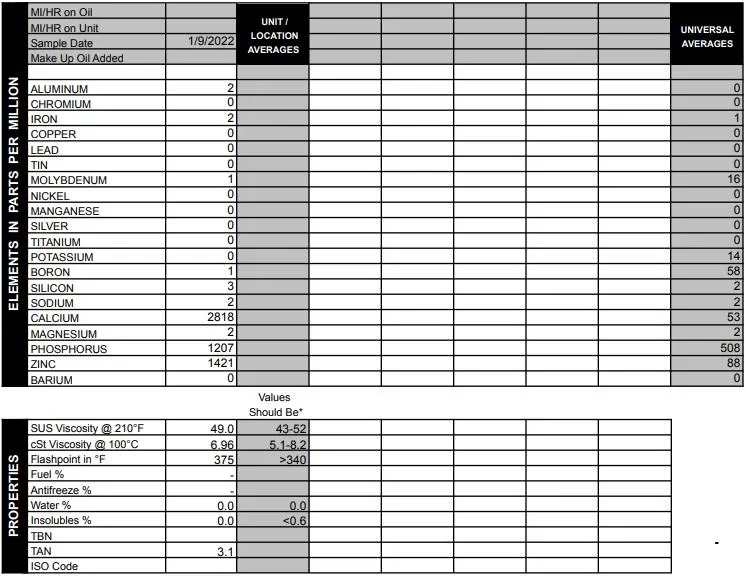
Credit to himemsys at BITOG for that.
The main additives here show up in the form of calcium, phosphorus, and zinc.
VOA Interpretation
Here's what subject matter expert MolaKule (someone who works in this industry and has formulated lubricants) has to say about the above lab result:
I started this section off by saying that Honda MTF is literally an engine oil with different additives, so what is different?MolaKule said:Thanks for the New Oil analysis.
Calcium is your main friction modifier, and the ZDDP is your main anti-wear chemistry AW with its phosphorus and zinc elements.
Sodium is an anti-rust component.
Calcium
The calcium may be evidence of a dispersant/detergent such as calcium sulfonate (the usual case in motor oil) but as Mola Kule says, the use case in gear oil would be as a friction modifier. Note that in an engine oil, calcium would have to be balanced out with magnesium to prevent LSPI, but we see none of that here. And that makes sense because this oil isn't intended to be exposed to combustion. Virtually all gear oils intended for use with synchromesh transmissions have some sort of friction modifier additive, which is there to help the synchronizers grab. If this were a motor oil, the calcium would be off the chart high, triple what is in modern engine oil. There's absolutely no need for that much detergent/dispersant in an environment that sees no soot or other combustion byproduct contamination. And engine oils aren't reliant on friction modifiers and extreme pressure additives in the same way synchromesh transmissions are. So by process of elimination, we can understand what's going on.
It's also important to understand that one additive can indeed do multiple things. More from MolaKule:
Zinc and PhosphorusMolaKule said:Magnesium and Calcium sulphonates or carbonates -- In an MTF this is the primary Friction Modifier, not a detergent. Specialized forms of Magnesium, Sodium and Calcium carbonates and sulfonates have been discussed as Friction Modifiers in MTF's and ATF's in various posts. Magnesium, Sodium and Calcium sulfonates and succinimides are used as detergents in engine oils. Since these are multifunctional additives, they also control acid formation.
Regarding the zinc and phosphorus in Honda MTF, they could be mistaken for an older engine oil formulation with more ZDDP (Zinc Dialkyl Dithiophosphate) but they are perhaps double what would be in most modern oils. ZDDP is an anti-wear (AW) and extreme pressure (EP) additive. It's important to note that for the purposes of use in a synchromesh transmission, ZDDP is activated with high heat and pressure, and it's attracted to iron. It does not attack brass and bronze found in synchronizers.
As for what Honda MTF lacks, in virgin motor oils we would be accustomed to seeing higher levels of molybdenum, boron, and silicon, on top of the aforementioned magnesium.
Molybdenum
Molybdenum disulfide (commonly referred to as just "moly") would fight the friction modifiers in this oil. It is used in GL-5 gear oils where there is sliding contact, but it isn't needed with transmission gears (typically calling for GL-4 gear oil) that have more of a rolling contact. In a synchromesh transmission, if the gear oil is too slippery, your synchronizers don't have enough grip to work and this will cause issues. Moly is also hard to flush out, because it sticks to the metal and gets into the pores. The 1ppm of moly you see in the Honda Genuine MTF VOA isn't enough to create an issue.
More on moly here.
Boron
Hexagonal boron nitride, boric acid, potassium triborate, sodium borate, borate esters, phosphorylated borate, and tri-potassium borate are another class of additives you might see in a GL-5 gear oil in the 100-500ppm range, and it's all but absent here at only 1ppm. Why? Boron additives act very similarly to moly additives in that they stick to the metal surface. It's for this same reason that they're bad for the synchronizers: friction is needed for synchronizer function, and if they're coated in a nano-layer of too much EP/AW additive, they stop working.
Some MTL formulations may use boron, but they're also likely using something to offset it. I have noticed that boron is present in many fluids designed for use in a transaxle with a hypoid gear - such as a Subaru manual transmission. Examples of this include Subaru's own 75W-90 and Motul Gear 300 75W-90. Because of the hypoid differential and transmission sharing one fluid, compromises in the additive package must be made. Our transmissions don't have hypoid gears and as such, lack the need for high levels of EP additive.
It's important to note that boron additives are typically a secondary EP/AW additive in that they tend to work best in colder temperatures, whereas the primary EP/AW additive (such as Sulphur-Phosphorus or ZDDP) will tend to work best in hotter temperatures.
What's impossible to discern
Because we are limited to understanding the elemental breakdown rather than the chemical properties (as just one example of many, calcium carbonate and calcium sulphonate will be indistinguishable on this ICP spectrometry test) and because we also aren't examining the physical nature of the additives (calcium sulphonate is a particle, and the size will vary) we can't know for certain what the absolute nature of any of these proprietary fluids is.
This is why I have referenced posts by MolaKule. His decades of experience with the chemistry and application requirements is what allows him to make those inferences.
The reality is that Honda is a car company, not an oil company. They pay third parties to blend and bottle their house-brand fluids, and those third parties are all using similar sets of base oils and additives, in a proprietary blend. They aren't even the same third parties across the globe - Honda MTF is made in at least three countries depending on the market: Japan, USA, and the UK.
What we can know - UOA
Worried your "Honda Genuine MTF" isn't the greatest? Worried your SuperLube Extreme XL++ is eating your synchros?
For a few smackeroos, send your used trans fluid off to a lab such as Blackstone or SPEEDiagnostix and find out what wear metals are floating around in there. They will send you a UOA or Used Oil Analysis looking something like this:
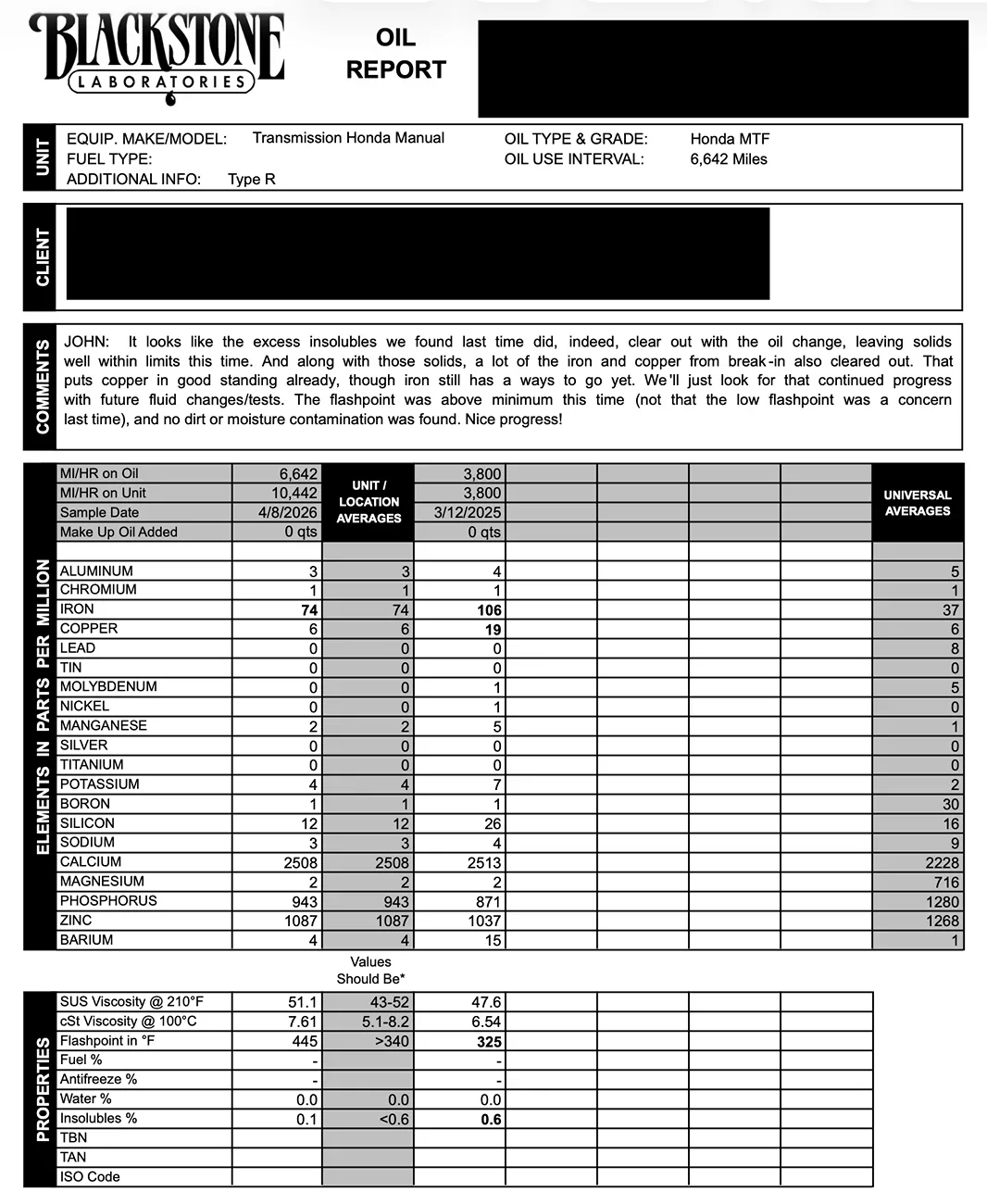
Credit to @johnloov for that UOA.
What to look for in third party fluids
This could be an entire book, so I'll try to keep it concise:
- API Category - GL-4 vs GL-5
- GL-4 gear oils have roughly half the EP additives as GL-5 gear oils. The reason for this is application: GL-5 gear oils are broadly intended for use with hypoid differentials, such as those found in vehicles with longitudinal engine layouts and rear differentials on AWD applications. Hypoid differentials have very specific EP additive requirements for longevity, and the primary additive used is sulphur-phosphorus (S-P). This is bad for manual transmissions in two ways: one, it's too slippery for the synchronizers to work properly. Two, the S-P additive chemically attacks yellow metals like brass and bronze found in synchronizers. We don't have a hypoid differential in our cars, so there is no reason to ever use a GL-5 gear oil.
- Some oils will claim both GL-4 and GL-5 compatibility. I believe these are formulated for transaxles that do have a hypoid gear, and they are best avoided due to the compromised nature of the additives. There need to be additional additives present to offset/passivate the higher levels of S-P additive.
- In short, always use a GL-4 gear oil.
- Oil viscosity
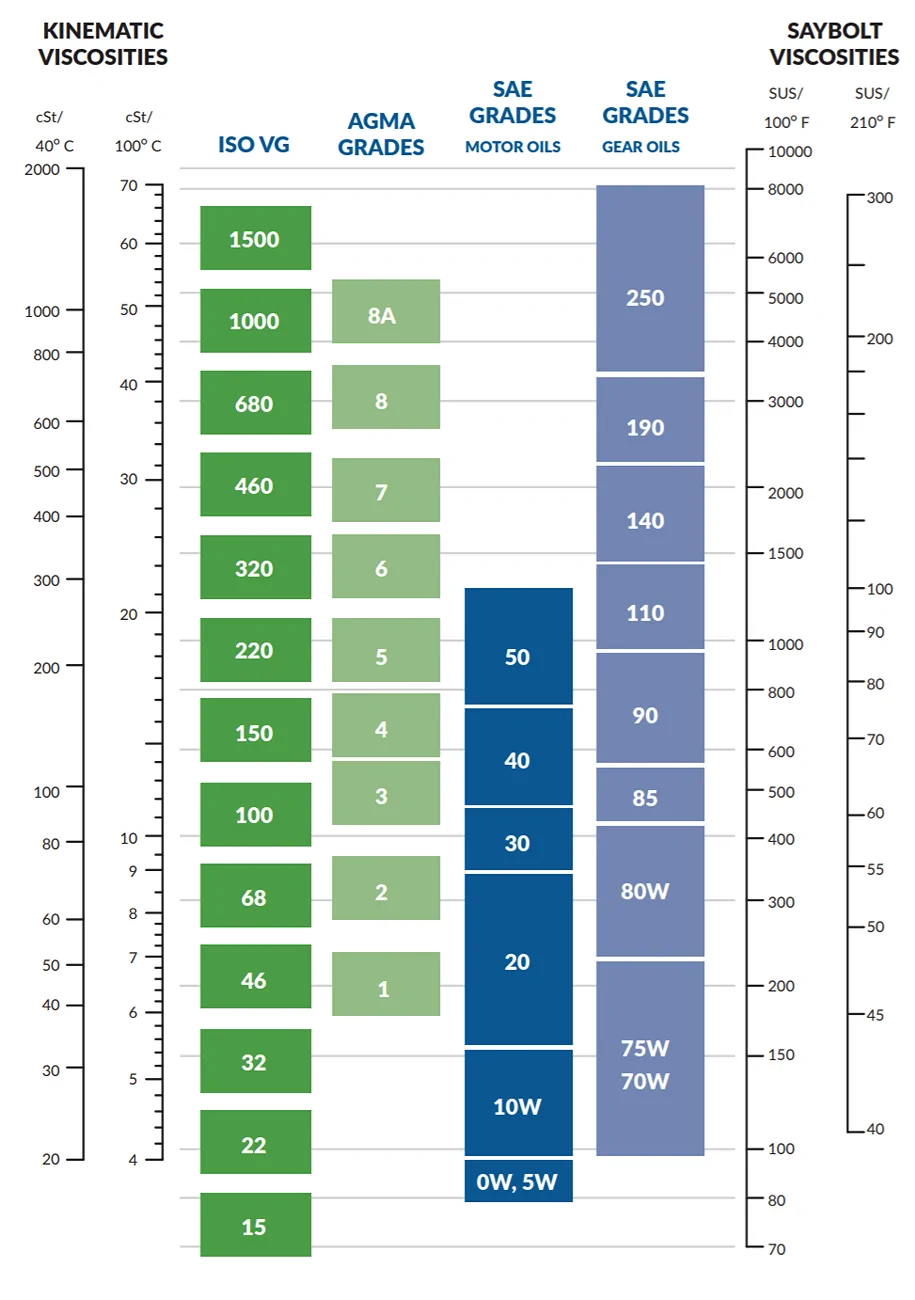
- Honda MTF is quite thin, somewhere between a 70W-75 and a straight 70W.
- If that sounds thick, it's not. It's closer to 0W-20 motor oil, however gear oils and motor oils use different scales in order to avoid customer confusion.
- Using a gear oil close to the Honda MTF spec is likely a good idea if you live in an area that gets extremely cold winters.
- Going up in SAE oil weight may be a good idea if you never deal with extreme cold, or you track your car regularly.
- I cover various fluids organized by oil weight in this thread.
- Additives
- Third party oil blends, just like the first party Honda blend, are proprietary. You aren't going to be able to easily find out whether a given blend is "right" for your application by looking at some ingredient label, simply because that information is tightly controlled.
- What you can do is put some trust in a couple of things:
- Manufacturer recommendations: Red Line for instance makes quite a few GL-4 gear oils, but the one they recommend in lieu of Honda MTF is Red Line MTL (75W-80 viscosity.) None of their other GL-4 gear oils are directly recommended for the Civic Type R.
- Manufacturer recommendations, part 2: If the oil manufacturer is advertising the gear oil for use in transmissions that are very unlike your transmission, then it's likely not the most suitable option out there. There's nothing to win by being a hipster and running gear oil intended for a dual-clutch transmission, simply because it says its for both DCT and manual transmissions. While DCT applications have a lot in common with our cars, they also have different needs such as running wet clutches. This is just one example, another is the different requirements of hypoid differentials that I covered above.
- End user experience:
- If you can find other people posting UOA, great! That's indicative of how the oil's anti-wear additives perform.
- If you can find other people posting about shift feel, also great! That's indicative of how the oil's friction modifier additives perform.
- If you can find other people posting about cold weather performance, extra great! That's indicative of how the oil's viscosity and VII additives perform.
I'm going to add to this thread when I run across disinfo (here and elsewhere) and include a rebuttal.
Last edited: